Pages

Showing posts with label dangers of scuba diving. Show all posts

Wednesday, June 22, 2011

How to Identify and Avoid Scuba Diving Risks

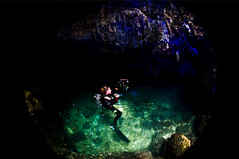
Diver under the Salt Pier in Bonaire.Image via Wikipedia

Scuba diving is a risky sport. While most people will have a very good dive and never have a single problem, there are still scuba diving risks that can occur at any time. It is very important that you pay attention and are aware of the risks that you could face during a dive.


Hidden risks are possible when scuba diving. Like a bad weather or shark attack, some risks can come from nowhere. Human errors can cause as well troubles like running out of air or failing of unconditioned equipment. With these scuba diving risks, no matter the causes are, alertness and appropriate preparation before going to dive is your best defense.


Risks involving your equipment are something that are usually easy to avoid. You should always take training classes and be sure that you have the necessary skills to handle a dive. It is important that you also learn about the equipment that you are using. Know how it works and what must be done to prepare it for a dive.


Weather and shark attacks are some of the risks that can\'t be controlled but can be avoided simply by being observant. Examine the spot where you are to dive. Ask for any attacking sharks cases in the area and check for weather reports. The water conditions are another thing to find out. Adhering to these directions will help you to avoid potential risks.


A diver in bad condition of health is likely to encounter many scuba diving risks. Don't plunge in the water if you are get a cold or allergies. Likewise, it is not wise when taking medications. Alertness and focus are greatly affected when you're unwell or on medication thus at all sorts putting you on risk.


Many scuba diving risks are an issue because they are something divers simply are not aware of or that they do not consider. One such risk is dehydration. Being in the water does not mean you can't become dehydrated. Diving is quite a physical activity, so be sure you are well hydrated before you go out.


Diving with a partner can often prevent risks from becoming life threatening incidents. To dive alone is a no-no. Your dive buddy can assist you if something's happening that seems not right. Diving alone is dangerous thus you should never do.

Scuba diving risks do not have to be a component of your diving experience. Being precautious and well prepared can result to a delightful diving experience. Be a smart diver paying attention to what are the best things to be done for risks avoidance.

Thanks to Scuba Dive

Kathy Dowsett

www.kirkscubagear.com
Enhanced by Zemanta

Friday, February 18, 2011

Best Scuba Diving Spots In The World

Manta Ray off Ishigaki Island in September of ...Image via Wikipedia

Once you've become a certified scuba diver, you'll want to visit one of the best scuba diving spots in the world. Travel to these unbelievable ocean escapes to see wrecked ships, go into deep caves or view vast coral reefs. Whatever adventure you are looking for, you will find them in these hot spots. Go around the world and see these awesome scuba diving sites in Africa, Egypt and even off an island in Hawaii.

1. The Yongala - Australia. If you love history and shipwrecks, then this is the best scuba diving spot in the world for you. The Yongala was a ship that sank in 1911 in Queensland. It's now a myopia of marine life like manta rays, sea snakes, octopuses, turtles, bull sharks, tiger sharks, and clouds of fish. Diving into the shipwreck however is off limits.

2. Blue Corner Wall - Palau, Micronesia. Wall diving is unique sport of scuba diving to where you use reef hooks to sustain your body to view the marine life around you. Here you will see a plehtora of barracudas, sharks, killer whales and large turtles.

3. Barracuda Point - Sipidan Island. If the idea hundreds of barracudas schooling around you excites you, this is where you need to go. This scuba diving spot is a barracuda haven along with leopard sharks and hammerheads.

4. Thistlethorn - Egyptian Red Sea. A British ship "Thistlethorn" sunk here in 1941. The ship is in great condition for wreck diving as it was filled with a cargo of war supplies: rifles, motor bikes, train carriages and trucks. It will take more than one day to see all the artifacts this sunken vessel has to offer.
5. Shark and Yolanda Reef - Egyptian Red Sea. This spectacular scuba diving spot offers three unique visuals. First a huge numbers of anemone; a shark reef, and finally the shipwreck "Yolanda."

6. Navy Pier - Western Australia. Considered one of the best shore dives on the planet, you'll find octopus, sting rays, white tip sharks, eels and humpback whales. You don't have to go deep into the ocean to get a great taste of aquatic life.

7. Manta Ray Night Dive - Kailua Kona, Hawaii. An unusual diving spot as underwater lights are placed on the ocean floor. At night the lights attract plankton which in turn attract manta rays.

8. Big Brother - Egyptian Red Sea. In this scuba diving spot, you'll find shipwreck the "Italian Aida II." This is considered a world class dive so you'll need insurance, logged 50 dives, and to own a surface marker buoy and a torch.
9. Great Blue Hole - Belize. This beautiful spot for divers is a ring of coral reef that surrounds a round hole. Inside you'll find sharks swimming along with colorful tropical fish.

10. Richelieu Rock - Thailand. Here you'll see barracudas, batfish and mantas, but that's not the main attraction. This is the best place to see whale sharks.

Thanks to mademan

Kathy Dowsett

www.kirkscubagear.com


Enhanced by Zemanta

Wednesday, February 9, 2011

Diving Basics: Give Your Body what it Needs

Pictogram representing the sport of Scuba diving.Image via Wikipedia

For someone who has never been scuba diving, it might seem that the sport doesn’t take much physical effort. When we see pictures and videos of divers, it often looks like they’re just floating around, and how much exertion can that take, right? But the truth is, scuba diving can burn as much energy as many aerobic sports, such as tennis or volleyball. How much energy you’ll burn depends on a few factors, such as the water temperature and the currents you’re in, but in all cases, you will end up putting forth some energy.

Diet

Many people who are about to go on a dive are traveling, and it might be tempting to hit the hotel breakfast buffet and load up on a lot of the fried or sugary foods there. It’s a better idea to stick to complex carbohydrates the day of your dive though. These foods, such as oatmeal (without a lot of sugar on it) or bran cereals, will help you to feel fuller longer and will maintain good blood sugar levels to keep your energy up during your dive. Greasy and spicy foods are not good choices, as they can make a diver uncomfortable while under water.

Once your dive is over, it will be time to fuel up after burning a lot of calories. Within an hour of your dive, be sure to have a decent meal to avoid feeling over-tired. Some will down an energy drink after a dive, but make sure to read the label and choose something that doesn’t have a lot of sugar or high levels of caffeine.

Hydration

Even though you’re completely surrounded by water while diving, it isn’t doing your body any good from a hydration standpoint. Just as with any physical activity, it’s very important to remain properly hydrated before and after scuba diving. It’s important to drink plenty of water throughout the day, making sure to increase the amount if the weather is hot. Drinking at least two quarts of water throughout the day of your dive will help reduce muscle cramps and fatigue.

General Precautions

Getting plenty of sleep before and after diving day gives your body an opportunity to recharge, and helps you avoid feeling rundown. Remember, diving can be a physically demanding activity, so getting plenty of rest on both ends of a diving day will definitely pay off.

It’s also important to put off diving if you have a cold or a cough. These conditions can make it difficult to equalize while diving, and that can be dangerous. Also, while decongestants might make you feel like you’re ok to dive, they can impair your performance while underwater, so it’s best to avoid them prior to a dive.

Scuba diving is a blast, and you certainly don’t have to be an athlete to enjoy it. Just be aware that it does take a certain amount of physical exertion. Follow the common sense tips above, and you’ll get the most out of every dive experience!

Thanks to Dive Dave!!!


Kathy Dowsett


www.kirkscubagear.com
Enhanced by Zemanta

Friday, January 28, 2011

Carbon Dioxide and Scuba Diving

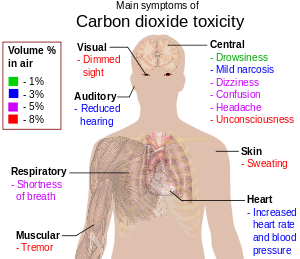
Main symptoms of carbon dioxide toxicity (See ...Image via Wikipedia

Most scuba divers do not learn about carbon dioxide during the open water course. Because the likelihood of carbon dioxide-induced problems is almost zero when proper diving practices are followed, the topic is often skipped over in certification classes.

However, carbon dioxide levels in a diver's bloodstream can rise under certain circumstances, and the effects can be disastrous. This article is not intended to frighten, but merely to inform. When a diver understands the risks of high concentrations of carbon dioxide, he is less likely to engage in behaviors that may predispose him to those risks.

Carbon Dioxide and Breathing:


The body needs a small amount of carbon dioxide for normal body functions. One of these functions is respiration. When a person inhales, he breathes in oxygen which his body metabolizes to create energy. One of the waste products of this metabolic reaction is carbon dioxide, which is eliminated from the body when the person exhales. Interestingly, it is the rising level of carbon dioxide in a person's bloodstream (not the falling level of oxygen) that signals the need for respiration.
How Does Your Body Maintain Safe Carbon Dioxide Levels During a Dive?:
A diver's body is constantly producing carbon dioxide, which it eliminates through exhalation. When a diver requires more energy, such as during moderate exercise, his body breaks down oxygen rapidly to provide that energy at a faster rate. This speeds the production of carbon dioxide. To keep the blood level of carbon dioxide steady, a diver's body increases his respiration rate to eliminate excess carbon dioxide, balancing its production and elimination.

Carbon Dioxide in a Diver's Body Can to Rise to an Unsafe Level:


Any factor that causes the concentration of carbon dioxide in a diver's body to rise to 45 mg Hg and above induces hypercapnia – a potentially dangerous excess of carbon dioxide. There are two situations in which this can happen.

• The concentration of carbon dioxide a diver inhales increases.
• A diver does not eliminate carbon dioxide as quickly as he produces it.

The Dangers of Hypercapnia:


1. Loss of Consciousness.
Carbon dioxide has an anesthetic effect on a diver's central nervous system. If the concentration of carbon dioxide rises to 75 mg Hg (depending upon the person), a diver may lose consciousness. Underwater, loss of consciousness is usually fatal – an unconscious diver generally loses his regulator and drowns.

2. Narcosis
The anesthetic properties of carbon dioxide at elevated concentrations can cause narcosis. Some of the common effects of carbon dioxide narcosis are the slowing of mental processes and the loss of dexterity. Only a very small increase in carbon dioxide levels is needed to produce these effects; carbon dioxide is four times more narcotic than nitrogen. In addition to producing narcosis on its own, carbon dioxide can also amplify the narcotic effects of nitrogen and other inert gasses.

3. Oxygen Toxicity
The human body has a programming glitch. It uses the level of carbon dioxide in the bloodstream to determine how much oxygen the body needs. In normal environments, this works well – as the carbon dioxide level increases, so does breathing rate, carbon dioxide elimination, and oxygen absorption. The higher the level of carbon dioxide, the harder a diver's body works to absorb oxygen. Unfortunately, in scuba diving high levels of oxygen can lead to oxygen toxicity, generally characterized by convulsions that result in drowning. High carbon dioxide levels cue the body to increase oxygen concentrations, speeding the onset of oxygen toxicity.

4. Decompression Sickness
Many hyperbaric physicians now believe that high levels of carbon dioxide may increase the risk of decompression sickness. One scenario is that high carbon dioxide levels interfere with the transport and elimination of nitrogen in the lungs. If the body is working hard to eliminate and exhale excess carbon dioxide, it will not be able to eliminate nitrogen as efficiently as it would if the carbon dioxide were not present. High levels of carbon dioxide lead to elevated levels of nitrogen in the body, which increases the risk of decompression sickness.

Avoid Elevated Carbon Dioxide Levels While Scuba Diving:


The most common behaviors and situations that increase the carbon dioxide concentration in a diver's bloodstream are listed below. By avoiding these situations, a diver nearly eliminates the risk of hypercapnia.

• Improper Breathing Techniques

Hyperventilation: When a diver hyperventilates, he fills only a small portion of his lungs and fails to fully exhale. This creates "dead" air spaces - spaces in the lungs and regulator in which air with high concentrations of carbon dioxide are not fully replaced with normally oxygenated air. For example, the first few mL of air a diver inhales from his regulator is "recycled," air with a high level of carbon dioxide from his previous exhalation. A diver must inhale fully to get past this air and receive fresh air. If a diver does not fully exhale, some of the of the old, carbon dioxide-filled air will remain in his lungs and he will breathe it again with his next breath. The concentration of carbon dioxide in a diver's lungs and regulator "dead" air space increases with each hyperventilated breath, leading to an increase in the level of carbon dioxide in his bloodstream.

Skip Breathing: In an effort to reduce air consumption, many divers hypoventilate or skip breathe. This involves extremely slow breathing. The diver exhales fully and then holds his breath "out", keeping his lungs empty for a period of time before breathing in. Hypoventilation increases the carbon dioxide level in a diver's lungs. Skip breathing can be dangerous because of the risk of hypercapnia.

• Physical Exertion
On land, a person's body adequately deals with the increased production of carbon dioxide during physical exertion by raising respiration rates. Underwater, the excess carbon dioxide is more difficult to eliminate. The breathing resistance of the regulator and the greater density of inspired air at depth make it nearly impossible for a diver to increase his breathing rate to match strong physical exertion. Either the diver begins to hyperventilate, increasing the level of carbon dioxide in his lungs while the carbon dioxide level in his bloodstream also increases, or he maintains a slow and steady breathing rate which is insufficient to eliminate the huge excess of carbon dioxide in his body.

• Deep Diving Without Proper Instruction and Gases
Air and other breathing gases become denser as they compress with depth. The more dense the air, the more difficult it will be for a diver to properly empty and fill his lungs with each breath. The result is retained carbon dioxide in the diver's lungs, similar to the situations listed in "Improper Breathing Techniques" above. This is yet another reason for divers not to go beyond the depth limits of their certification level. Deep diving courses train scuba divers in proper breathing techniques and teaches them about the gas mixtures needed for deep diving. Proper training will help deep divers avoid the risk of hypercapnia.

• Poorly Functioning Breathing Equipment
Regulators that breathe "hard" or increase the resistance of breathing can increase the level of carbon dioxide in a diver's bloodstream. When breathing resistance increases, divers find it hard to draw a full breath and exhale fully. Again, this leads to unintentional hyper- or hypoventilation, which increases carbon dioxide levels. Keep in mind that some regulators will breath easily on shallow dives, but may be inappropriate at greater depths.

• Breathing Gas Contamination
In contemporary scuba diving, it is extremely unlikely to encounter contaminated breathing gas. Strict regulations governing compressor use have helped to standardize tank filling practices. However, if the intake of a compressor is close to the exhaust from an internal combustion engine or other source of carbon dioxide, the air from the tank may contain abnormally high levels of carbon dioxide. While a high level of carbon dioxide may not cause any ill-effects when the tank is tested on the surface, underwater the increased concentration of carbon dioxide may lead to hypercapnia. Carbon dioxide is an odorless and tasteless gas, but other contaminants from exhaust are noticeable. Smell and taste the air from a scuba tank before diving with it. Any unusual findings could indicate that the tank air is contaminated with exhaust or other pollutants which may be accompanied by carbon dioxide. Report strange odors and flavors to the fill station or dive shop and don't dive if you think the tank may be contaminated.

Signs and Symptoms of Hypercapnia:

One of the problems divers face when dealing with elevated levels of carbon dioxide is that the signs and symptoms indicative of an increasing concentration of carbon dioxide may be masked by the dive environment. For example, symptoms such as elevated breathing rate may be attributed to excitement or cold water. Symptoms like headache may be misattributed or absent due to the high partial pressure of oxygen at depth. Unfortunately, this means that the first sign of carbon dioxide toxicity may be sudden unconsciousness. Here are common signs and symptoms of hypercapnia.

• shortness of breath
• headache
• narcosis - confusion, slowed thought processing, loss of manual dexterity
• unconsciousness

Remember, Hypercapnia Is Avoidable:


Basic good diving practices can nearly eliminate the chance of hypercapnia. Hopefully after reading this article, you will be convinced to always . . .

• Use regulators appropriate for the depth of your dive
• Avoid exertion underwater
• Use proper breathing techniques
• Avoid deep diving without proper training, gear, and gas mixtures
• Smell and taste tank air to check for pollutants that may indicate an excess of carbon dioxide

Remember, knowledge is power. The more you know, the safer you will be underwater. Happy Diving!

Thanks to Natalie Gibb and About.com

Kathy Dowsett

www.kirkscubagear.com
Enhanced by Zemanta

Friday, January 21, 2011

Throwing cold water on winter dive doesn’t cool enthusiasm for scuba

Wearing dry suits on Long Island, New York in ...Image via Wikipedia


While Boxing Day shoppers were chasing hot bargains, Fraser Debney and three of his scuba diving friends were into something much colder – the frigid waters of the St. Lawrence River.

For Fraser, who is beginning his third year in the sport, the dive at Cardinal in Eastern Ontario was primarily to test his ability to withstand cold water without the gear normally used in such water temperatures.

“It gave me an opportunity to push the limits of my wetsuit,” said Fraser, who lives in Montreal. “The other three more experienced people had dry suits (preferred for cold-water dives because of their warmth).”

Fraser improvised by wearing a fine thermal type of underwear under his wetsuit. “I found that it works well. It gets wet but still stays warm in that layer (between the wetsuit/underwear and his body).”

He had no problem staying in the water for 25 minutes or more. Unfortunately, almost all that time was spent standing near shore helping the others with their gear because his alternate air source froze open as soon as he entered the water. “The air runs continually and there’s no way to shut it off.”

Fraser aborted his dive but the other three divers went down to the wreck of the Conestoga, a freighter carrying a cargo of wheat that burned and sank in the 1920s. Two of the divers experienced similar problems as Fraser did and had to surface. The fourth was fine.

The dive site was chosen for its “large safety factor.” The Conestoga wreck is the location of many training dives. It’s shallow (the ship is within 20 feet of the surface) and the current is not strong. A bonus in winter is that there are fewer particles in the cold water so visibility is better. This helps underwater photographers capture good wreck pictures.

On Boxing Day the river was especially cold (one degree Celsius), which contributed to the freezing problem. Fraser said a lot of dive gear is designed for southern climates, adding that some will say it is cold-water ready, “but cold to California is different than cold water in Canada.”

There is cold-water gear designed to withstand the conditions but it is more expensive. While Fraser found he could get by in cold water without a dry suit, he also learned the temperature limitations of his regulator. “My local dive shop is going to run an ice diving course and I was thinking of participating. Now I know my equipment would not sustain doing that course.”

Kathy Dowsett


www.kirkscubagear.com
Enhanced by Zemanta

Monday, January 3, 2011

“Let go of me!” What to do when you’re entangled down deep

Scuba diver in kelp forestImage via Wikipedia

People say that no matter how careful you are with your actions, there will still be moments where you have to face danger. This is Especially true, when, as a scuba diver when you’re deep down under the sea.

One of the common dangers that scuba divers like you and I should be aware of is getting entangled or entrapped. What do we do in order to avoid these situations? How should we deal with it?

When you come to grips with the sea and it won’t let go

The first tip is that you should never dive a wreck or other overhead environment without the proper training and equipment. Common sense, right? Right. But some still do. Just like the soldiers who should not to go into battle without thorough training and suitable equipment, you shouldn’t dive without proper gear and training.

Second, you must approach those wrecks, cavern, fast-moving water, and other entanglement or entrapment hazards with extreme caution. Be wary of your immediate surroundings. Keep alert of anything that might entangle you or otherwise harm you.

Accidents happen

Now, even if you have kept those tips in mind, there may still be times that you will, for some stupendous reason, still get yourself entangled. Just in case, here’s what you do if ever you do get entangled:

The very first thing that you should keep in mind is that you have to stay calm and conserve your air. Be mindful of your breaths and try to make sure that you’re breathing out in minimum because you’d want your air supply to last.

During these kinds of situations, you should use all the possible means to draw any co-diver’s attention to your situation. You may bang on your cylinder with a metallic device like a knife or any metallic object you have with you to draw attention. You should also use an underwater horn or rattle if ever you do have one with you.

Thirdly, you should also consider use a safety sausage or SMB to signal for help.

Your last option would be, if your air supply is already depleted, and you cannot disentangle your equipment, consider ditching your gear and making an emergency ascent to the surface. Do that ONLY when all other option seems bleak.

As mentioned earlier, there just those darned times when accidents happen. So it’s essentially important for you to always be careful of when you’re deep down under the sea. I’m sure that this would be taught by your diving instructor – if not already. And always keep in mind that you should first think of your safety before exploring the beauty of the sea.

Thanks to Sean Si of Expeditionfleet Blog

Kathy Dowsett

www.kirkscubagear.com
Enhanced by Zemanta

Wednesday, December 15, 2010

Scuba Diving Travel Insurance

Cueva TainaImage by Bolivar Sanchez via Flickr

Scuba diving is a form of simple but heart touching fun. It offers a great thrilling. But the fact is that one must be aware of the danger of the Scuba diving. Because of the fear and danger it has one must pay some attention and it requires some extra precaution to be taken. There are some others form of diving. We all know about the cavern or cave diving where one enters an underwater cave or cavern and in these areas there are a number of rough coral and rocks. If you don’t pay your attention there is the real possibility of getting cut. It is obvious that if the cut is severe enough then you may need will for stitches or possibly, a hospital stay.It will cause a great misery ans it is really unwanted. This may be very serious if anyone get injured in foreign countries. Because there is no one to help you. There may be a lack of hospital insurance and allowances may be very high.What can a person do at that stage? They must need a Scuba Diving travel insurance and it will help them to pay the fees and other cost very easily. Otherwise one may have to pay out of their own pocket.Their insurance will ensure their safety and will minimize the cost of accidents and dangers. One may think that his insurance money now is making a lot of benefit for them. Scuba diving travel insurance is not very much different from other travel insurance plans.It gives all the benefits to the clients at time of danger. Divers get injured most of the time and there are number of fatal accident every year.The insurance provides solid safety for the divers. Scuba diving insurance policies are made specially for the divers.Most of the divers take this insurance seriously.It is a great advantage for anything that is unexpected and that is to be faced.It is a matter of realism and the understanding that any hobby may bring a little bit of risk and injury as well.Many other form of sports have the same insurance policies.In most of the cases it act like a future deposit. It is a smarter way to face anything that is dangerous to health.You can have a simple policy for you.The best thing is to choose such policy that is easier to maintain.All you need is your prediction and vast vision.You have to be very realistic and always should be very careful about your ambitions.Hope,you will get a easier insurance plan that is best for you for Scuba diving and enjoy the Scuba diving with a free mind.

Thanks to Ronty Jhodes and the Dive Site Network

Kathy Dowsett

www.kirkscubagear.com
Enhanced by Zemanta
rough coral