Pages

Showing posts with label Scuba Scoop. Show all posts

Thursday, September 4, 2014

Scuba Diving Is A Wonderful Sport: Just Eliminate The Risks

Adventure channels and tourism channels show glorious breathtaking visuals of blue skies and crystal clear water and people scuba diving among the fishes. The question that arises is whether we are safe, amongst a vast variety of underwater life, some of which can be extremely dangerous and in territory that is alien to humans, we are not born to swim and we cannot breathe underwater, can we?

The simple answer is yes and no. It is similar to mountaineering. When Edmund Hillary was asked whether mountaineering was dangerous he said, not if you respect the mountain. Scuba diving is also not dangerous if you respect it. It is not dangerous as long as you follow security guidelines, have the right equipment, know your limitations and stay within those constraints.

A little risk is involved, the operative word being 'little.' According to the DAN Diving Fatalities Workshop Report, fatalities are extremely rare and in their 2010 survey they found that fatalities happened once in every 211,864 dives. How risky is that? More drivers die in road accidents and chances of you dying in a long distance race are higher than in scuba dying - so the likelihood of your dying in scuba diving is rather remote.

As with any extreme sport, an element of risk is always there. Divers are totally dependent on their equipment to breathe. Their journey back to the surface depends on their skills, using gear rightly and emergency training. Approach the sport with the right spirit and character. Grow into it with practice and training. Don't take undue risks. The larger fish down there may seem docile, but they are not dogs that you can pat and hug so maintain a reverential distance.

Surveys have revealed that most of the fatalities that have occurred in the sport were caused by human errors and were completely avoidable. The three prime causes were a pre-existent disease in the diver, straying beyond one's capability and descending rapidly.

People who died owing to a pre-existent disease did not declare their medical conditions in the scuba diving medical questionnaire. Had they done so they would not have been allowed in the waters. Descending rapidly makes for poor buoyancy control and makes the diver panic and make mistakes. Finally you are so pumped up and in over-confidence you stray beyond your limits and cannot alert your partners when an emergency occurs - false bravado often ends in disaster, not only in scuba diving, but in all walks of life.

To ensure that your scuba diving is a great fun-filled experience, just make certain that you plan your dive before you step into the water. Never dive deeper than your first dive. Check your dive gauges continuously and stay within the prescribed ascent and descent rates.

Carry a 3-minute safety stop halfway in the dive, to see if everything is under control and don't continuously ascend and descend when you are under the water. And never exceed the limits of your training and skills.

What if you were to suddenly encounter a shark? Don't panic, be calm and remain close to your dive buddy. Sighting one is rare and an awe inspiring sight, so enjoy it. However, maintain a respectful distance and don't swim away rapidly. You cannot out-swim it but after its curiosity is satisfied it will swim away. This is what happens almost every time - think of the great time you will have regaling your friends and family about your great shark encounter.

Article Source: http://EzineArticles.com/?expert=John_S_Sims

Kathy Dowsett
www.kirkscubagear.com

Wednesday, August 7, 2013

Build A Diving Helmet from a Water Heater (Jan, 1932)

A Diving Helmet from a Water Heater

THEY go down to the sea in old water heaters along the Atlantic coast these days, now that some young man with a leaning toward aquatic sports has proved how easy it is to make an excellent diving helmet from a metal water heater which will enable its wearer to walk comfortably on the sea floor 35 feet and more below the surface. A few feet of garden hose, two pairs of bellows, a couple of valve boxes and a cylindrical metal boiler of the type used in most homes for heating water, are the essentials for building one of these helmets.

Perhaps the most important part of the whole apparatus is the bellows arrangement which furnishes air to the diver. Two bellows are required, operated alternately to furnish a steady stream of air. This air goes through two valve boxes which prevent its return, and it is forced down into the diving helmet and out around the diver’s shoulders. A pressure of fifteen pounds per square foot is all that is required at ordinary depths, and this the bellows will amply supply.

Four boards 12 by 24 inches are required for making the two bellows. Cut these to the pattern as shown, and in two of the boards drill a pair of one-inch holes to admit air. On the inside of the board, covering the holes, tack a piece of chamois by its four corners to act as a valve.

Gores for the bellows are cut out of leather in accordance with the printed pattern. Moderately thin and very flexible leather should be used, of the type which is usually found in shoe uppers and which your local shoemaker can supply. Prolonged soaking in soapy water will increase the pliability of the leather. Apply a generous amount of cold water glue to the edges of the bellows boards and tack the leather in place with brass headed upholstery tacks.

A tin snout is used at the end of the bellows to make a connection with the garden hose which is used as an airline in this diving apparatus. The hose is, of course, tightly secured at the connecting points with clamps or wire wound tightly around the outside. Construction of the valve boxes is simple and is clearly shown in the drawing.

Two are used, one for each line from the twin bellows. They are merely check valves to make sure that the air flows in one direction only, towards the helmet. White pine is used in their construction and the boxes are well varnished when completed. The valve used is of light chamois with a small oak counterweight tacked or glued to it to assure rapid closing of the valve.

The fittings used to connect the valves and the helmet with the hose line are ordinary marine water intakes which you can obtain at any hardware store, at a cost of about eighty cents apiece. Use white lead in the holes and apply rubber gaskets under the fittings. Three feet is the proper distance between the valve boxes and bellows; the distance between valve boxes and helmet can be varied to suit.

Next comes the helmet itself. Mark off the openings to be cut for the diver’s shoulders, being sure to leave ample space for the head. Suggested proportions are shown in the drawing. Cutting is done with a cold chisel or a welding flame. For padding around the edges where the helmet fits over the shoulders three or four layers of an old inner tube are used, folded and riveted into place
A piece of cylindrical glass of the same curvature as the boiler is inserted in the front of the helmet for a window.

This glass can be purchased for about two dollars from the nearest wholesale glass jobber, who can be reached through your local hardware merchant. A flange of 16-gauge cold-rolled sheet steel is used to back up the glass. Smooth-on iron cement which, when set, is watertight and strong, is used to hold the glass in place. In operation the helmet will prove buoyant, and to counteract this a set of lead weights should be attached. Twelve pounds will be sufficient in most cases.

Two men are necessary in using the diving apparatus, one as the diver, the other to operate the bellows, which are pumped alternately. The idea is to keep a steady pulsation of bubbles coming to the surface from the diver. He absorbs some of the air in the helmet when he breathes, which is replaced with fresh air, and when he exhales the surplus is forced out under the helmet and finds its way to the surface.

Should a break occur in the air line the diver is in no danger, for he can readily slip off the helmet over his head and swim to the surface unhampered. The depth at which this apparatus is workable is determined as the point where the pressure of the air supplied by the bellows is equal to that of the water. Depths of 20 feet are easily attained, and for making repairs on boat hulls, recovering sunken parts or for studying lake bottoms this is usually quite as far as one cares to descend.

Thanks to Modern Mechanix


Kathy Dowsett
www.kirkscubagear.com

Sunday, July 7, 2013

10 Facts About Sharks

There are several hundred species of sharks, ranging in size from less than ten inches to over 50 feet. These amazing animals have a fierce reputation, but fascinating biology. Here we'll explore ten things that define sharks.


1. Sharks are cartilaginous fish.
The term “cartilaginous fish” means that the structure of the animal’s body is formed of cartilage, instead of bone. Unlike the fins of bony fishes, the fins of cartilaginous fishes cannot change shape or fold alongside their body. Even though sharks don't have a bony skeleton like many other fish, they are still categorized with other vertebrates in the Phylum Chordata, Subphylum Vertebrata, and Class Elasmobranchii. This class is made up of about 1,000 species of sharks, skates and rays.

2. There are over 400 species of sharks.3. Sharks have rows of teeth.
The teeth of sharks don’t have roots, so they usually fall out after about a week. However, sharks have replacements arranged in rows and a new one can move in within one day to take the old one’s place. Sharks have five to 15 rows of teeth in each jaw, with most having five rows.

4. Sharks do not have scales.
A shark has tough skin that is covered by dermal denticles, which are small plates covered with enamel, similar to that found on our teeth.

5. Sharks have a lateral line system, which detects movements in the water.
Sharks have a lateral line system along their sides, which detects water movements. This helps the shark find prey and navigate around other objects at night or when water visibility is poor. The lateral line system is made up of a network of fluid-filled canals beneath the shark’s skin. Pressure waves in the ocean water around the shark vibrate this liquid. This, in turn is transmitted to jelly in the system, which transmits to the shark’s nerve endings and the message is relayed to the brain.

6. Sharks sleep differently than we do.
Sharks need to keep water moving over their gills to receive necessary oxygen. Not all sharks need to move constantly, though. Some sharks have spiracles, a small opening behind their eyes, that force water across the shark’s gills so the shark can be still when it rests. Other sharks do need to swim constantly to keep water moving over their gills and their bodies, and have active and restful periods rather than undergoing deep sleep like we do. They seem to be “sleep swimming,” having parts of their brain less active while they remain swimming.

7. Some sharks lay eggs, others give birth to live young.
Some shark species are oviparous, meaning they lay eggs. Others are viviparous and give birth to live young. Within these live-bearing species, some have a placenta like human babies do, and others do not. In those cases, the shark embryos get their nutrition from a yolk sac or unfertilized egg capsules filled with yolk. In the sandtiger shark, things are pretty competitive. The two largest embryos consume the other embryos of the litter! All sharks reproduce using internal fertilization, though, with the male shark using his "claspers" to grasp the female and then he releases sperm, which fertilize the female's oocytes. The fertilized ova are packaged in an egg case and then eggs are laid or the egg develops in the uterus.

8. Sharks are long-lived species.

While nobody seems to know the true answer, it is estimated that the whale shark, the largest shark species, can live up to 100-150 years, and many of the smaller sharks can live at least 20-30 year.

9. Sharks are not vicious man-eaters.
Bad publicity around a few shark species has doomed sharks in general to the misconception that they are vicious man-eaters. In fact, only 10 out of all the shark species are considered dangerous to humans. All sharks should be treated with respect, though, as they are predators, often with sharp teeth that could inflict wounds.

10. Humans are a threat to sharks.
Humans are a greater threat to sharks than sharks are to us. Many shark species are threatened by fishing or bycatch, amounting to the death of millions of sharks each year. Compare that to shark attack statistics - while a shark attack is a horrifying thing, there are about 10 fatalities worldwide each year due to sharks. Since they are long-lived species and only have a few young at once, sharks are vulnerable to overfishing. One threat is the wasteful practice of shark-finning, a cruel practice in which the shark's fins are cut off while the rest of the shark is thrown back in the sea. The U.S. is considering the Shark Conservation Act of 2009, which would eliminate the practice of shark finning in the U.S.

Thanks to About.com

Kathy Dowsett
www.kirkscubagear.com


Monday, July 1, 2013

Exploring the Civil War’s underwater history


His father’s passion for archaeology and history spurred Lee Spence’s interest in shipwrecks.

“When I was a child my father was in military intelligence. We travelled all over the world and he would point out historic sites. He bought me books. The first one I remember was Robinson Crusoe. I was probably nine years old and that got me hooked, as if I wasn’t hooked enough already

His father had already taught him to put his face in the water, cup his hands above his eyes and blow a bubble into them, so he could see what was on the bottom. Eventually he got a real mask and started finding small treasures. At age 12 he built his first self-contained dive gear. “It almost drowned me. It’s not something I would recommend,” he says of his experiment in build-your-own scuba equipment.

Spence found his first shipwreck before he saw a real set of scuba gear and had been discovering wrecks for four years before he became a certified diver in 1963.

While Spence’s explorations also included ancient ruins, subterranean caves, castles and palaces, it was shipwrecks – particularly Civil War ships sunk off the South Carolina coast – that really intrigued him.

He is probably best known for his discovery in 1970 of the H.L. Hunley, which during the Civil War became the first submarine in history to sink a battleship. “It could go under another vessel and stay down for over an hour.”

But among the scores of named ships and hundreds of unidentified wrecks he has discovered, his favourite is the SS Georgiana, a Civil War blockade runner that was sunk off the Atlantic coast of South Carolina. He started researching it in France because he knew his family would be moving back to Charleston, South Carolina.

“It was the one I got really fascinated with and it taught me more about research than anything else . . . all the things necessary to track information.”

This included researching documents in government libraries, and touching base with sources such as Lloyds of London, various museums, government officials in England and the U.S. and even with the police department in Liverpool because detectives there had investigated the SS Georgiana to determine if it was a war vessel or not.

Newspapers described her as a privateer and reported that the SS Georgiana was faster and stronger than any of the other Confederate cruisers. Still, the ship was sunk on its maiden voyage on March 19, 1863. It was carrying a cargo valued at one million dollars, a fortune by the standards of 150 years ago. The cargo included munitions, medicines and merchandise. The supplies were paid for with cotton and gold from the South.

Federal ships were anchored off the Confederate coast to blockade the ports and intercept and capture vessels bringing supplies to the Confederate states from England and Europe. Spence says the crew of the USS America spotted the SS Georgiana and sent up flares to alert the rest of the fleet. They converged on her a mile off shore near Charleston.

“They came alongside her and, despite her having an iron hull, the rounds were passing through one side of her and out the other. At one point the enemy ships were so close the Georgiana’s crew could hear the orders to fire,” says Spence. “She almost got away but an exploding cannon ball that went off under her stern damaged her propeller.”

No one died on the SS Georgiana because the captain ran her aground close to shore.

The SS Georgiana was officially owned by Charleston entrepreneur George Trenholm, who was fiercely loyal to the South and had decided to dabble in privateering. Privateers were privately owned vessels sanctioned by their government to enforce their laws and capture enemy commerce. Spence says before the Civil War the U.S. was one of the few major countries that did not outlaw privateering. “It had used privateers to successfully fight the British in two wars and had used them against the French and even against the Algerian pirates.”

In investigating the history of the ship, Spence came to believe that Trenholm’s life was the basis of Rhett Butler’s character in Margaret Mitchell’s famed novel, Gone with the Wind. That was later confirmed by several of Mitchell’s relatives. The Charleston shipping magnate had made a fortune by running blockades, and many of the unique events described in her book came directly out of Trenholm’s life.

Despite his extensive work underwater exploring shipwrecks, E. Lee Spence has quite a portfolio of work on dry land. He has a doctorate in marine history and has written about 30 books, one of which is Shipwrecks, Pirates and Privateers: Sunken Treasures of the Upper South Carolina Coast, 1521-1865. His website is http://shipwrecks.com.

Kathy Dowsett
www.kirkscubagear.com

Update July 1, 2013

E. Lee Spence has just been credited with the discovery of the SS United States, which was built during the American Civil War. Spence, along with Brandon Fulwider and Mike Stearns, were the first to dive to the 19th-century steamer found in 16 feet of water off the South Carolina coast. The ship disappeared in 1881 and is part of a cluster of vessels that were lost on Cape Romain’s outer shoal.

Friday, April 12, 2013

Diving Doc: Preventing and Treating Coral Scrapes

Scuba diving is traditionally a look, don't touch kind of sport. But even careful divers can inadvertently run into trouble. By far the most common diving injury is the common scrape, usually from coral.

Irritations often occur as a result of a brush with coral or sponges. Coral scrapes can be painful and sometimes difficult to heal because the living organisms in the coral can get into the wound and cause infections. Contact with a sponge can leave irritating fibers in the skin, producing an itching rash that can range from mild to severe, possibly with pain and blistering.

Even if you're careful, it's likely you'll come into contact with coral someday. If and when, here's what to do:

1. An ounce of prevention is worth a pound of cure. Makes sure your body is covered, even if just by a dive skin, and wear gloves where allowed.

2. Regularly irrigate a scrape with copious amounts of vinegar over a period of about 30 minutes.

3. Apply triple-antibiotic to the wound twice a day for a couple of days.

4. Scrapes can become infected even with proper initial care. Watch for hotness to the touch, redness or red streaks around the site, swelling, discharge of pus, or fever. If you see them, contact a doctor.

5. Fragments of coral sometimes become lodged beneath the skin and the body mounts a prolonged allergic reaction to them. In some cases, debridement is required to resolve the reaction.

Even in the absence of embedded coral remnants, it is not unusual for a marked hypersensitivity response to a coral injury to continue for three to four weeks before significantly improving. Sometimes the lesion will resolve, then return.

If a scrape doesn't substantially resolve within a month, or gets worse, you should consult a dermatologist.

Editor's Note: Even innocent injuries can turn deadly if you have an allergic or severe reaction. After any accident, watch for severe swelling, dizziness, blurred vision, breathing difficulties, weakness, muscle pain, cold sweat and a rapid heartbeat. If any occur, call 911 (or DAN's emergency hotline 919-684-4DAN if no emergency services are available) immediately. Injectible epinephrine can help calm allergic reactions. CPR may be necessary until help arrives.

Thanks to Doc Vikingo has been scuba certified for more than 35 years and has dived all over the world. He is a practising doctor in the Baltimore/Washington D.C. area and has held faculty positions at several major hospitals, including Johns Hopkins. With an interest in diving medicine, he serves as administrator at Scuba Clinic Online.

Kathy Dowsett


www.kirkscubagear.com

Monday, April 1, 2013

Shipwrecks of April 1

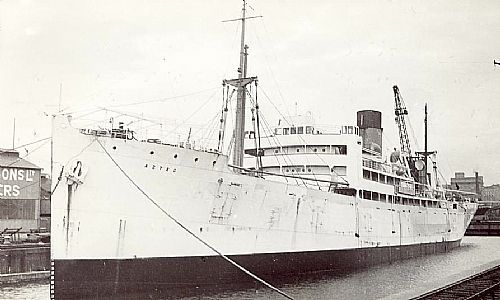
1814: Picture SS AZTEC.

"The following is used with permission from Dr. E. Lee Spence's daily blog Today's Shipwrecks™ (copyright 2013 by Dr. E. Lee Spence) on www.shipwrecks.com."

The United States Revenue Service schooner Gallatin, Captain John H. Silliman, was sunk a few yards off the end of Blake’s Wharf at Charleston, South Carolina, on April 1, 1813, by a violent explosion in her powder magazine. Her stern and quarterdeck were blown entirely away and she sank in just a few minutes. The cause of the explosion was not known and First Lieutenant Philips, who had left the vessel just prior to the explosion, reported that the magazine had been locked. There were 35 men aboard her at the time of the explosion. Gunner’s mate Thomas Feld; George Segur; and another man were reported missing and presumed dead. Gunner William Pritchard; John McCoan; Benjamin Chart; George Craft; and a boy named William Hunter were severely wounded, and several others were slightly wounded. As late as February, 1814, the vessel still had not been raised despite announcements that efforts to raise her were to have begun the day after the explosion. (Note One: She had been originally purchased at Norfolk, Virginia, in December, 1807, by Captain Hugh McNeill as a Treasury Department Revenue Cutter for the Charleston station for $9,432.93. She was named for Albert Gallatin who had been Secretary of the Treasury under Thomas Jefferson. During her career she was active in suppressing smuggling and frequently assisted merchant vessels, which were in distress. Acting under Navy orders during the War of 1812, the Gallatin intercepted a British privateer on August 6, 1812, and took her after a fierce battle that lasted 8 hours.) (Note Two: The “Charleston Courier” of February 26, 1814, reported that a diving bell had been constructed at Charleston, South Carolina, for the purpose of raising the guns, etc., from the wreck of the United States Revenue Service schooner Gallatin. All previous attempts to raise the wreck intact had failed.)

1816: A small sailboat plying between Sullivan’s Island, South Carolina, and Charleston, with a crew of two, was upset in a squall on April 1, 1816, near Castle Pinckney in Charleston Harbor, South Carolina, and one man was drowned.

1818: The vessel Keddington, Captain Bacon, from Jamaica to London, was lost on April 1, 1818, “on Atwood’s Key,” Bahamas. Her crew and part of the cargo were saved.

1835: The sidewheel steamer Augusta caught fire at her wharf at Augusta, Georgia, on April 1, 1835. Four lives were lost and the vessel and her machinery were destroyed. The passengers escaped with their luggage. [Note: The Augusta had a wood hull and was built in 1833 at Savannah, Georgia, which was also her first home port. She was 151 (or 157 tons). The Augusta was owned by the Steam Boat Company.]

1844: The British brig Helen, of Swansea, Captain Simpson, 49 days from Newport, Wales, went ashore on the Hunting Islands, South Carolina, on April 1, 1844. The Helen was also reported as “ashore on the breakers at South Edisto,” South Carolina. She carried a cargo of railroad iron, consigned to J. Gadsden & Nephew, of Charleston, South Carolina. The crew was saved.

1846: The schooner Commerce, Captain Burnham, bound from St. Johns, Florida, for Nassau with a cargo of lumber, was “wrecked at Harbor Island” (Harbour Island, Bahamas) on April 1, 1846.

1859: The steamboat Augusta was destroyed by fire on April 1, 1859, while she was tied up at Grey’s Point, below Silver Bluff on the Savannah River, forty miles below Augusta, Georgia. Mr. Henry Day (the first engineer who was a citizen of Savannah) and “three negro men” were drowned. The Augusta was burned to the water’s edge and, along with her cargo, was a total loss. (Note: She carried 778 bales of cotton and 538 barrels of flour, which was insured in New York, Boston, and Savannah. The boat originally cost $15,000 and was not insured. If based on the price of gold, her cost in today’s dollars, would have been well over $1,000,000.)

1860: The small steamboats Cherokee and Calhoun were burnt at Rome, Georgia, on April 1, 1860. (Note One: The Cherokee was owned by the Alabama Planters Steamboat Company and the loss was put at $14,000. $4,000 was covered by insurance. The Cherokee had cost $17,000 and had run about fourteen months.) (Note Two: The Calhoun was owned by the Oostanaula Steamboat Company. She was a new vessel, having run only three or four weeks on the Oostanaula River. She had cost $6,000 and was not insured.) (Note Three: These losses don’t sound like much until viewed in today’s dollars, which would have been over $3,000,000.)

1917: The first armed American merchant ship sunk by a German submarine in World War I was the SS Aztec. The Aztec, 3,727 tons, bound from New York for France, was shelled and torpedoed on April 1, 1917. She sank very near the Ile D’Ouessant (Isle d’Ushant). She carried foodstuffs; general supplies; tinplate; 448,195 pounds of refined copper ingots; 42 barrels of lead acetate weighing a total of 23,385 pounds; 1949 barrels of zinc oxide weighing a total of 265,325 pounds, and 52 boxes of metallic cadmium weighing a total of 7,500 pounds. Today the copper would be worth over $1,500,000; and the cadmium another $90,000. The zinc and lead would also have considerable value. But don’t get too excited, the copper was partially salvaged by an Italian firm in 1956.

1942: The British freighter Eastmoor, 5,812 tons, bound from Savannah to England via Halifax, was sunk by the German submarine U-71 off the Virginia coast in latitude 37°33′ North, longitude 68°18′ West. She carried 273 tons of zinc, 317 tons of steel ingots, 1,063 tons of pig iron, 1,052 tons of zinc bars, 91 tons of magnesium metal ingots, and 444 tons of cannon powder. At $0.90 per pound, the zinc is worth about $2,385,000. Depending on its purity, magnesium sells for about $2.45 making it worth about $445,900. Based solely on the time period, she may have also carried some silver.

Thanks to Dr E Lee Spence

Kathy Dowsett
www.kirkscubagear.com

Wednesday, March 13, 2013

Friends share stories of diving beneath the ice

Brad Grecula could not see anything in the pitch-black water. Very slowly, something came into focus before him.

Grecula was looking at the Hopkins/Minnetonka shipwreck, which was once part of a fleet of six streetcar boats that transported people around Lake Minnetonka in the early 1900s.

When her sister boats were being dismantled and sunk in 1925, Capt. George Hopkins purchased it, renamed it Minnetonka and operated it as an excursion boat until 1949. At that time, it was sunk near her sisters north of Big Island. The state recognizes it as an archeological site, according to Maritime Heritage Minnesota.

As an outline of the wreck appeared before him, Grecula was sure it was the Hopkins/Minnetonka. After all, he and his friends had a GPS location on the shipwreck as they drove through a dense fog over the frozen lake, but diving through pitch-black water can mess with your mind.

“Your imagination can run away from you when you’re down there,” Brian Dahl said.

Divers going so deep that sunlight does not reach them can attest to what Grecula and Dahl are saying. What makes their tales even more harrowing is the only way they can escape the water is through a small hole in a thick sheet of ice.

Ice diving can be a deadly recreational activity if you are not properly trained and do not take the safety precautions seriously.

MyFox Twin Cities reported a story two years ago of a pair of ice fishermen hooking a scuba diver. The story had some comical elements to it because the fishermen thought they caught a big one. The diver was unharmed and offered a couple of beers as a peace offering, the fishermen told Fox news.

Dahl of Andover, Grecula of East Bethel, Art Gullette of Andover, John Oliver of Isanti and Nate Putbrese of Cambridge know this diver and this story was no laughing matter because several safety measures were not followed, they later learned. Ice divers are a fairly tight-knit group in Minnesota because there are so few of them, Gullette said.

The Professional Association of Diving Instructors is the not the only diving certification organization, but is the largest by far, said PADI spokesperson Bridget Evans. Over the last five years, more than 1,700 PADI ice diver certifications were earned throughout the whole U.S. In 2012, only 11.3 percent of all PADI certifications earned were for ice diving.

Mitigating the dangers

There are many safety measures to check off before going on an ice dive. The obvious first step is to make sure the ice is thick enough on which to drive a vehicle. Once on the site, they usually have a chainsaw to cut a triangle hole in the ice. They can cut a square, but a triangle takes less effort to cut because it has one less side.

They must be attached to a rope so they have an easier time finding the ice hole. Another step that can be taken is to clear snow in the shape of an arrow. Sunlight will highlight the arrow and give divers a bearing.

The most ideal situation is to have one person diving and another person on the ice in their gear in case the diver has to be rescued. There should be at least one and preferably two tenders in case both are in the water.

Ice diving is such a challenge that Dahl said PADI recommends a person have at least 50 dives before they can be trained.

According to Dahl, one of the most important traits he picked up from ice diving is the ability to remain calm and problem solve in tense situations.

A saying that stuck with Oliver is, “technical diving is the only sport where you can kill yourself and have half-an-hour to think about it.”

Gullette said this can be true of any type of diving, but the more logistically challenging the dive, the more true this is. There is a large difference between recreational and technical diving, he said.

Scuba diving in a river is beyond the level of most ice divers because “the current can take you into no-man’s land where there is no exit hole,” Oliver said. A second exit hole is a must for river ice dives, Gullette said.

If anybody feels nervous, a dive is called off without question.

Each of them has a different standard for calling a dive, however. Gullette is probably the most cautious, while Putbrese is the risk taker, to the chagrin of Gullette.

“When Nate calls it, I check my pulse because I may already be dead,” Oliver said.

Dahl, Gullette, Oliver and Putbrese know what a search and rescue feels like from the other side because they used to be volunteers for the Isanti County Sheriff’s Office dive team.

Isanti County does not have the budget for all the equipment so much of it is the diver’s own gear, said Chief Deputy Bill Guenther of the Isanti County Sheriff’s Office. Two men with their own gear recently volunteered to be the county’s only two dive team members, he said.

Although they may give Gullette a hard time for being such a stickler for the rules, he is deeply respected.

“I’ve done a fair amount of training through other instructors, but Art is hands-down the most thorough,” Oliver said. “It’s not that he wants to keep you there for an extra two hours. He wants to make sure you’re absorbing what he’s trying to tell you. I’ve told him before, when my daughter gets certified, he’s the one that’s going to do it.”

Some wild tales

Gullette first tried ice diving in 1975 and he swore he would never do it again, but he decided to give it a try when he met Putbrese in 2004.

“Nate and I have an interesting relationship. I keep Nate alive. He keeps pushing my comfort zone and envelope and keeping it fun,” Gullette said.

While they gave Putbrese some grief, Dahl was quick to note that Putbrese is very experienced and “dive smart.”

Dahl met Gullette through work at the Minnesota Department of Corrections and started diving around 2005. Oliver started ice diving in 2008 or 2009 just a year or two after celebrating his 40th birthday.

The four of them soon connected with Grecula, who began diving shortly after he graduated from high school in 2008. “Shortly after high school in 2008? Why do we let him hang out with us?” Dahl said while they all chuckled.

Their schedules do not always allow the five of them time to get together when they are not diving, but when they got together for an interview at Gullette’s Andover home, there was a lot of reminiscing, laughs and some head shaking.

One story Gullette really wanted to tell was the first time that Oliver was the unexpected rope tender on the surface. Oliver was still new to ice diving, so Gullette was training him on rope tending. Gullette was diving and Putbrese was supervising him on the ice.

Gullette suddenly came up to the surface all excited, telling them he found a wreck and giving them the coordinates so they knew where he was going. When he was surveying the wrecked boat, he looked to his left to see Putbrese swimming up to him. It turns out that Oliver was tending them both, which really made Gullette mad at Putbrese.

Another interesting tale was about a fisherman throwing his wedding ring down his ice hole on Mille Lacs Lake. The Isanti County dive team happened to be training in the area and Putbrese volunteered to recover the ring and, of course, document it.

Putbrese taped his descent and recovery of the ring and posted it on YouTube. Search “Nate Putbrese” to find his YouTube channel and the video. When he sees the ring, you hear him gurgling “my precious” in homage to the character Gollum from J.R.R. Tolkien’s “The Hobbit” and the “Lord of the Rings” trilogy.

Then there are the stories of Putbrese pushing the envelope. One time Gullette got out of the truck and walked to shore with his cell phone in hand and watched as Putbrese gunned the truck across the ice.

Oliver said Putbrese has graduated from “rock, paper scissors” to flipping a coin to determine if they should walk or drive across the ice. He will often throw these coins in the water to make a sacrifice to “the lake gods” and to see how long the coins are visible.

Thanks to ABC Newspapers

Kathy Dowsett

www.kirkscubagear.com

Monday, March 4, 2013

Diving background helps agent in travel business


Bryan Cunningham believes the scuba diving travel business is missing the dive boat when it comes to serving its customers.

After working as a scuba instructor, he is now a scuba travel specialist for Travelpath, a Burlington, Ontario-based travel agency.

With more than 10,000 dives to his credit, having run dive shops and instructed in the Caribbean for 12 years, as well as in the Middle East for six years, he brings a first-hand perspective to the job.

“I have personal contact with the owners of dive shops and I have most of them on Skype. That means I can ask for extra things,” he says, citing nitrox and larger tanks as examples. “I can ask the manager if he has this available. Although he may not have the big tanks he may have a sister operation that has them. They give better service to a travel agent than an individual. They stand to lose a lot more business if they let a travel agent down.”

The core principle of his business is customizing a dive vacation to the client’s needs and that of the diver’s family.

“Eighty per cent of people don’t want to dive for the whole holiday. Or, if the husband dives and wife doesn’t, I tailor it to what they want. You need to know what else is available. If a wife is an outdoors person, Belize has an outdoor jungle facility. If she likes shopping and casinos, then maybe Nassau is better. It depends on what the non-divers want to do.”

Bryan also books dives for cruise ship passengers, pointing out that they will pay 30 per cent more if they go through the cruise line. “We can book a dive for every (cruise ship) stop. You don’t have to worry about currency. The shops I work with are used to working with cruise ships.

For those planning on combining diving with a cruise vacation it is important to know the diving opportunities in the ports the ship will visit. Some aren’t good for diving, while others stop at all the good dive spots. Also, adds Bryan, you need to know the location of the port with respect to diving. For instance, sometimes the best diving is on the opposite side of an island from where the ship docks.

Some ports have better transportation service for cruise ships than others. In St. Lucia, says Bryan, a dive operator has a separate boat just to pick up divers travelling on cruise ships. Some have a separate bus for the same purpose.

Another problem Bryan says he can help divers avoid is choosing the wrong hotel. A hotel on an island that is distant from the port where the best diving is found could lead to a costly taxi ride every time they dive.

Choosing a dive site itself depends on the diver’s interests. That could range from diving ship wrecks, to coral reefs and marine life. Availability of the latter can vary with the time of year because some species, such as whale sharks, migrate.

In terms of coral reefs, divers may have their preferences. For instance, the hard corals of the Indian Ocean are more colourful, while the soft corals found in the waters of the Caribbean look blander. “Both are nice in their own way, but different,” says Bryan.

“I have dive destinations virtually anywhere you want to go. Tell me the type you want and I will find them. I have been to 32 Caribbean islands and haven’t seen half the Caribbean, but I’ve seen a lot more than any other travel agent.”

For more details, see this website: http://www.scubadestinationdeals.com/


Kathy Dowsett
www.kirkscubagear.com

Wednesday, February 20, 2013

Canada’s oldest shipwreck to be resurrected in replica of 16th-century Basque galleon

It’s the oldest shipwreck ever found in Canada and one of the most important in the world: a 16th-century Basque whaling galleon that lies at the bottom of Labrador’s Red Bay, a sunken relic from the Age of Discovery that symbolizes the early spread of European civilization — and commerce — to the New World.

Now, the 450-year-old San Juan, a jumble of thick beams and broken barrels lying in shallow waters off the site of a 1560s-era whaling station in the Strait of Belle Isle, is to be resurrected by a team of Spanish maritime heritage experts planning to construct a full-scale, seaworthy replica of the original 16-metre, three-masted vessel.

Parks Canada underwater archeologists, who discovered the 250-tonne San Juan in 1978 after following documented clues about a lost galleon traced by federal archivist Selma Barkham, will meet this week with Spanish officials to begin sharing decades of amassed research on the ship’s design and construction, Postmedia News has learned.

Then, to mark the Basque city of San Sebastian’s year as Europe’s “cultural capital” in 2016, Spain expects to christen its floating tribute to the whaling crews that — for several decades during the 16th century — transported millions of barrels of whale oil to Europe from the future Canada, a treasure every bit as valuable at the time as the gold taken by Spanish conquistadors from more southerly parts of the Americas.

“Right from the start, we thought this was a really, really great idea,” said Marc-André Bernier, Parks Canada’s chief of underwater archeology. “For archeologists, this is basically the ultimate final product. You’re taking all of the research from a site that’s been excavated, then you take it to the maximum in experimental archeology,” physically recreating “what is lost.”

For Robert Grenier, Bernier’s predecessor as Canada’s top marine archeologist and the leader of the Red Bay discoveries more than three decades ago, the planned construction of a San Juan replica is “like a dream.”

The 75-year-old Grenier, whose work at Red Bay was featured in a National Geographic cover story in 1985, is now retired but has agreed to serve as a consultant to Spanish shipbuilders on the San Juan project.

He previously collaborated with Basque heritage experts on the recreation of a chalupa — a smaller boat used by whaling crews to pursue and harpoon bowhead and right whales — that was also found at the Red Bay site.

“To the Basques, this is the Holy Grail,” he said of the planned San Juan replica on Monday, while visiting a display on Basque whaling operations at the Canadian Museum of Civilization in Gatineau, Que.

The Canada Hall exhibit features a 20-to-one scale model of a Basque whaling galleon, as well as a full-scale reproduction of the stern of the ship.

“They are so thankful to us — Canada and Parks Canada — to have restored to them the glory of their golden age,” said Grenier.

The replica galleon to be built in the coming years is expected to travel between European cities during 2016 to mark the San Sebastian celebrations, then set sail for Labrador and other East Coast destinations in 2017 — in time for the 150th anniversary of Confederation — to help spread awareness of the deep historical connection between Canada and Spain.

“It’s their heritage,” Bernier said of the Basques, who live in the coastal region straddling the border of northeast Spain and southwest France. “But it’s also a shared heritage.”

Significantly, Bernier noted, the Red Bay wreck dates from an era before European shipbuilding had developed to the point of creating blueprints prior to construction.

“There were no ships’ plans — they were built with traditional knowledge,” he said. “Everything was in the shipbuilders’ minds. That’s why the data from the archeology is so critical.”

In the decades following the New World discoveries of Christopher Columbus and John Cabot, the expert shipbuilders, sailors, fishermen and whalers from the Basque country began making transatlantic voyages to exploit coastal Canada’s cod and whale populations.

Lamp oil from whales killed in the Strait of Belle Isle became the key commodity for Basque entrepreneurs, who developed shoreline “factories” to render hundreds of thousands of barrels of oil and organized regular shipping schedules between Canada and Europe to deliver the product.

The sinking of the San Juan, which was loaded with thousands of barrels of rendered whale blubber when it foundered close to the Red Bay shore in 1565, was essentially Canada’s first oil-tanker disaster. Much of the cargo was, however, recovered before the vessel was crushed by winter ice.

Although the presence of Basque whalers in 16th-century Canada was long known to historians, it wasn’t until Barkham presented fresh evidence at an Ottawa archeological conference in 1977 that plans were made to search for physical traces of the whalers’ activities in present-day Labrador.

Along with the wreck of the San Juan, Parks Canada archeologists eventually found traces of three other galleon-class cargo ships, as well as the well-preserved chalupa rowboat.

Land-based excavations led by Newfoundland archeologist James Tuck also yielded burial sites, clothing, tools and countless other relics that recalled a time when hundreds of Basque workers might spend a whaling season in 16th-century Canada.

Today, Red Bay is a national historic site and Parks Canada tourist centre. An image of the San Juan is used by the United Nations as its logo to promote the preservation and celebration of the world’s underwater heritage, and a five-volume, 2008 compendium of Red Bay archeology written by Grenier and Bernier has been hailed internationally as a model for scholarly research on shipwrecks.

Red Bay is a leading contender to become Canada’s next UNESCO World Heritage Site.

Thanks to Canada.com

Kathy Dowsett
www.kirkscubagear.com

Saturday, February 16, 2013

Making the Most of Your Day on a Dive Boat

Arrive at the boat well before departure time. If the crew says it’s okay to board, climb on and take advantage of your punctuality for an unhurried look around. Check out the boat’s layout, find a good spot for your gear that’s out of the way or close to the gate or that offers protection from the sun.

- If you don’t need it, leave it in your dive locker. On a busy dive boat there’s not much space allotted for each diver, so bring only what you’re going to need for the morning or afternoon dives. That way you can stow all your gear at your dive station without it overflowing into your neighbor’s space. If you can’t carry everything in one trip, you’ve probably got too much.

- As soon as possible, assemble you reg and BC on your tank and give them a quick test to make sure the tank is full and all systems are go. That way, if you got a short fill or if a gear failure occurs you still have a hope of getting a replacement. Also, do a final inventory check to make sure you have everything you need for your dives, like both fins, your mask, maybe a trusty pocket light for checking out the holes in the reefs, and, if the boat requires it, a safety signal tube.

- Don’t be shy about asking questions. All dive boats have their own rules and routines, so if you’re unsure about how to secure your tank, where to stow your weights, or which bucket is for mask rinsing and which is for cameras, simply ask. A good crew will always choose answering easy questions up front over scrambling to catch a tank that’s about to topple over or tripping on an errant dive bag. Knowing the proper boat procedures makes life easier for everybody.

- When you arrive at the dive site, resist the temptation to start obsessing on your gear and instead pay close attention to the pre-dive briefing. This is when you’ll learn about bottom contours, prevailing currents, depths and compass directions. Having this info tucked in your head before the dive will make all the difference in your comfort level and confidence during the dive, plus it can avoid having to be retrieved by the dive guide when you get lost, which is always embarrassing.

- Don’t forget to bring some cash for tips. A top-notch boat crew and dive guide who have both skills and sunny attitudes are instrumental in delivering to you a really enjoyable day in the water. Show your appreciation; they’ve definitely earned it.

From Sport Diver

Kathy Dowsett

www.kirkscubagear.com

Wednesday, February 6, 2013

Scott's Descending Life

For Scott Wilson, the underwater mysteries of the Solomon Islands were a highlight of 13 one-hour “Descending” documentaries he produced along with business partner Andre Dupuis for the Outdoor Life Network.

There, they explored wrecks of vintage Second World War aircraft on the ocean floor. “The artifacts are still there,” says Scott, a pilot and aviation enthusiast. “It throws you back in time.”

While they also saw submarines and ships on the bottom, it was the aircraft that intrigued Scott. They included a B-17 (a four-engine bomber), Zeros (Japanese long-range fighters), a P-47 Thunderbolt (a single-engine fighter-bomber) and a Corsair (a carrier-based fighter).

But the wreck of a PBY Catalina, an American flying boat used during the Second World War for transporting cargo, search and rescue, convoy escorts, patrol bombing and anti-submarine missions, was special to Scott and Andre.

“The guy who took us is the only one to see it before us,” says Scott. “The flaps were down so it crashed either on takeoff or landing. The Solomon Islands (due east of Papua New Guinea) were a wonderful location for me. I was in my element, checking off these wonderful aircraft.”

Another of his favourites in the Descending series was Iceland. When it comes to diving he is ordinarily a “wreck person,” but in Iceland they were diving for geological purposes. This included the Silfra dive site in inland Iceland, where two tectonic plates – one North American and the other European – had separated and created a crevice in the Earth. It was only about 25 to 30 feet wide and 100 or more feet deep. “It is filled with glacial runoff water and the horizontal visibility is great. You can see forever. It’s a surreal dive – amazing.”

In Iceland, they also dove into the crater of a volcano that was filled with water. “Gases were coming off. You could see it bubbling.

The roots of Descending, a spinoff firm from parent company Echo Bay Media that Scott and Andre founded and own, go back to “Departures,” their first series. Departures, a travel documentary, involved 42 one-hour programs. One of them was a trip to Brazil, where they first experienced scuba diving. “Andre and I came out of that experience having fallen in love with diving.”
After training and getting their certification, the Descending series was a natural follow-up to Departures.

The two business partners became friends when they were both students in the media arts program at Sheridan College. They observed that many of the students wanted to emulate the full Hollywood movie process with enormous crews.

“We found when we were working together that it worked better with two people. If we needed a third person for lighting we would get somebody. The other side of it is we are kind of perfectionists. We want to edit it, colour correct it . . . we have a hard time letting it go. Sometimes that’s a negative.”

They started their company as a partnership in 2000 and incorporated it five years ago. As owners and creators of their shows, they have the luxury of choosing their own path. Decisions are made only after a lot of research.

“We wanted to show in Descending that diving wasn’t just seeing pretty fish in warm places,” says Scott.

It is also about sharks, diving in places such as South Africa, Iceland and, in Canada, in the Great Lakes and British Columbia.
“We wanted variety. We wanted to show there are lots of reasons to get into the water and see the other 70 per cent of planet, which is water. We would try to do it from a diver’s perspective. We would seek out local knowledge and have people take us to the best sites.”

If a dive required a greater knowledge or skill set, it was important to the two producers to make that point. On a dive to a wreck that involved risks, the film makers would go down with someone who knew the wreck. “We don’t want to send the wrong message.”
But they also wanted to illustrate there are plenty interesting dive sites to explore that don’t require someone to be a technical diver.

Ironically, the only injury Scott suffered in travelling the world for their documentaries involved an accident involving his passion – flying. They were at a marine sanctuary in Raja Ampat, Indonesia, where oceanographers have been setting records of counts for fish species and corals on a single dive. It is quickly becoming a hotspot for divers.

Andre had just completed an aerial photo shoot in a small ultra-light type float plane and suggested Scott fly with the pilot next. They were flying low over dugongs (large marine mammals similar to manatees) and decided to take another look. The pilot pulled the plane into a climb before making a 180-degree turn. The aircraft stalled in a fairly steep bank and crashed nose first into the water.

Fortunately, both survived. Scott had lots of scrapes and scars on his legs but no broken bones. There would not be a new aircraft-wreck dive site.

Their contract with Outdoor Life Network completed, Scott Wilson and Andre Dupuis will now seek markets for Descending elsewhere.
For the Hamilton-Ontario-based film makers, that job just became a little easier. In January, they learned that Descending had been nominated for four Canadian Screen Awards (formerly known as Geminis).

Kathy Dowsett
www.kirkscubagear.com

Saturday, February 2, 2013

Ask an Expert: Should Surface Markers Be Mandatory When Diving?

Con, by Chris Parsons: Dive-training agencies should teach SMB use, not mandate it

When I was asked to be the “con” on this topic, I almost said no — I rarely dive without a surface-marker buoy. After some thought, though, I realized that while there are definitely times when an SMB — or other type of surface marker — should be considered essential, mandating its use doesn’t really solve the problem.

One easy argument against mandating surface markers is that some dives simply don’t need them, and they might, in fact, get in the way — ice diving in a Minnesota lake comes to mind.

So who should mandate surface markers? Government? No, thank you. Training agencies? They don’t teach SMB use in the basic classes; it would be a huge jump for them to suddenly mandate them.


That really just leaves dive operators.

Operators can and sometimes do require SMBs. Unfortunately, that doesn’t mean that a diver is able or even willing to use an SMB properly. I’ve seen many divers in situations that clearly indicated a surface marker ought to be deployed, but the SMB often remained clipped to their BC. When I asked later why they didn’t inflate it, despite being a mile away from the boat, I generally got a puzzled look rather than an answer.

There is a larger point here, and it is that divers simply need to be better prepared, and moreover, to take responsibility for their own safety. If conditions or a location prescribe that a diver should have a surface marker, it should be incumbent upon the diver to have one. Mandating a piece of gear doesn’t train the diver, nor does it prepare them.

I’ve been on boats where SMBs are required and seen divers show up without one. The dive operator will typically loan the diver one, and often the diver needs a quick lesson in how to use it. Note that this represents two strikes against the diver already — they showed up without an SMB, and they don’t know how to inflate it. Worse, they don’t understand when to deploy it — if the boat is a mile away, it might be too late. Strike three.

When there is boat traffic or significant current, the prudent diver might deploy the SMB from depth using a reel or spool. Once on the surface, the diver should be focused on boat traffic, not fumbling to inflate a surface marker. To do this, divers need to be trained and able to practice the skill. To my knowledge, SMB deployment from depth is not taught in Open Water or Advanced classes. Rather than mandating its use, perhaps the training agencies should teach its use — and its importance.

I understand why dive operators feel compelled to require SMBs. Ideally, they shouldn’t have to, but too many divers show up unprepared. That shouldn’t happen. Divers who show up at a dive operation should take the time to get trained, understand the consequences of diving in that area, and arrive with the gear needed for the dive.

This one should be on the diver.

Pro, by Alice Darwent: You never really know when you might need it

Ending your dive safely and getting back on board the boat are undoubtedly the most important aspects of diving, especially if you’re drift diving. This is why every diver should carry a surface-marker buoy and be shown how to use it safely.

In Tobago, where the majority of dives are done as drift, guides carry an SMB so the boat captain can monitor where they are at all times. The currents around the island can be strong, which is why the Association of Tobago Dive Operators recommends that you dive with a guide and not on your own. All ATDO member dive shops make sure their guides dive with an SMB. The Professional Association of Diving Instructors even runs a specialist course to teach divers the knowledge and techniques required for the safe use of SMBs.

There have been well-documented cases of divers going missing; happily, most of those divers are found. Inves- tigations into what went wrong usually reveal that the dive leader was either not carrying an SMB or that the SMB was not large enough to be seen by the boat captain. In cases where divers do go missing, having more than one SMB to blow up and wave around on the surface of the water will greatly increase their chances of being found. This is why every diver should have an SMB in his BCD pocket when he dives — to use in case of an emergency. You can be the world’s most safety-conscious diver, but sometimes Mother Nature throws you a curve ball, and you find yourself in an emergency situation. Carefully planning every dive you do will minimize risk, and that careful planning should include what you do if you get lost and what equipment you need — an SMB is part of that equipment.

SMBs also identify you to other marine traffic. Underwater, it's hard to determine the direction of sound, such as the noise of a boat propeller. Bear in mind too that the captain of the vessel will not know you are close to him. He might see bubbles, but by then it could be too late. Carrying an SMB, which is usually bright orange or yellow, clearly identifies where you are and warns marine traffic to stay away.

Personally I never dive without an SMB, even if it’s a shore dive. You never know when you might need it.

Chris Parsons is an underwater photographer, boat captain, rebreather diver and former PADI instructor. He is the rep for Nuticam and Zen Underwater photo gear.

Alice Darwent has been affiliated with the dive industry for 25 years. President of the Tobago Dive Association, she is owner of AquaMarine Dive, Speyside, Tobago.

Thanks to Scuba Diving

Kathy Dowsett
www.kirkscubagear.com

Tuesday, January 29, 2013

Sharks are not 'man-eaters'

The term "shark attack" is typically used by the media, government officials, researchers and the public to describe almost any kind of human-shark interaction - even those where no contact or injury occurs between humans and sharks.

Now, Christopher Neff of the University of Sydney, Australia, and Robert Hueter, leader of Mote Marine Laboratory's Center for Shark Research in Sarasota, - the only Congressionally designated national research center in the U.S. focused on sharks - propose a new system of classification to support more accurate scientific reporting about shark interactions and more accurate public discussion about shark risk to swimmers and divers.

The international study, published this week in the peer-reviewed Journal of Environmental Studies and Sciences, is titled, "Science, policy, and the public discourse of shark 'attack': a proposal for reclassifying humanshark interactions."

In the study, the authors analyzed global shark statisticsand found the term "shark attack" misleading in many cases. For instance, a 2009 government report from New South Wales, Australia, documented 200 shark attacks - but 38 involved no injuries to people.

In Florida, often called the "Shark Attack Capital of the World" because of the number of reported shark attacks, only 11 fatal bites have been recorded over the past 129 years - a lower number than several other locations in the world, and vastly lower than deaths from natural events such as drowning or lightning.


"Not all shark 'attacks' are created equal, and we certainly shouldn't call bites on kayaks and bites on people the same thing," said Neff, a doctoral candidate conducting the first study on policy responses to shark bites at the University of Sydney.

"Nor should we equate the single bite of a 2-foot shark on a surfer's toe with the fatal bite of a 15-foot shark on a swimmer, but that's how the current language treats these incidents," said Hueter.

The Neff-Hueter study groups shark incidents into four categories based on clearly documented outcomes rather than speculation over shark motives and intentions. These include:

1, Sightings of sharks in the water near people with no physical contact.

2, Shark encounters where no bite takes place and no humans are injured, but physical contact occurs with a person or an inanimate object holding a person, such as a surfboard or boat. A shark might also bump a swimmer and its rough skin might cause a minor abrasion.

3, Shark bites by small or large sharks that result in minor to moderate injuries.

4, Fatal shark bites causing fatal injuries. The authors caution against using the term "shark attack" unless the motivation and intent of the shark is clearly established by experts, which is rarely possible.

"These new categories provide better information to the public so they can judge their levels of risk based on local shark activity," Neff said. "If 'sightings' of sharks are increasing, or if 'encounters' with kayaks are decreasing these are important pieces of information. There simply is no value in using 'attack' language. It is time to move past 'Jaws.' "

"Contemporary scientific understanding of sharks paints a very different picture than that current public discourse and even early research," said Hueter, a world expert in shark biology, behavior and ecology. "Few sharks look like the large great whites you might see on the movie screen. Of about 500 shark species on Earth, most grow to less than 3 feet long. In addition, most shark species rarely, if ever, come into contact with humans. When they do, serious bites are the extremely rare exception rather than the rule."

Sharks were labeled "man-eaters" two centuries ago by scientists who had a limited understanding of shark behavior and biology, and a researcher in the 1950s wrongly suggested sharks could go "rogue," developing a taste for human flesh.

These concepts inflamed public concern and resulting government responses. Multiple nations have used shark hunts and intensive commercial fishing targeting sharks - and even deployed naval depth charges - to kill supposed "rogue" sharks and protect the public.

Popular culture - especially the novel and film Jaws in the 1970s - has strengthened rogue shark legends. News media reports also have contributed to misperceptions of human-shark interactions. The current study reviewed Associated Press articles in Florida during 2001 - known as the "Summer of the Shark" because of shark incidents ranging from minor to severe - and found 79 percent of the stories used "attack" in the headline, even in the case of non-serious injuries.

Indiscriminate use of the term shark attack "can create a perception of a premeditated crime, lowering the public's threshold for accepting shark bite incidents as random acts of nature. The narrative establishes villains and victims, cause and effect, perceptions of public risk, and a problem to be solved," the authors say in the study.

In contrast, the Neff-Hueter naming system would provide a more balanced way to describe shark risks, significantly adjusting reported statistics, the authors say.

In the government report from New South Wales, Australia, the new naming system would reclassify 200 shark "attacks" between 1900 and 2009 as: 56 fatal shark bites, 106 shark bites, 37 shark encounters and 1 shark sighting.

In Florida, the 637 confirmed cases of unprovoked shark "attacks" since 1882 would be reclassified as 11 fatal bites and 626 other interactions including bites, encounters, and a small fraction of sightings. (Shark incident data from the International Shark Attack File.)

"When public discussion centers on the idea that sharks are out there attacking humans, it doesn't reflect the reality of what we have learned over the past 40 years about shark behavior and biology - sharks are not man-eaters, and in fact, many shark species are threatened by humans who overfish them. Using the 'attack' language really hinders public discourse about the need to protect shark species, especially those vulnerable to depletion or even extinction," said Hueter.

Thanks to MocaGrandeTalk


Kathy Dowsett
www.kirkscubagear.com

Friday, January 18, 2013

Night Snorkeling - Discover the Wonders of Snorkeling at Night

Snorkeling at night can be extremely exciting. This snorkeling activity is in fact my favorite type of snorkeling. The only other activity that may surpass it, in my opinion, is night scuba diving due to the fact that you have more chances to dive deeper, otherwise night snorkeling still gives you the same adrenalin buzz.

So why would anyone try and snorkel at night? It might seem strange and intimidating. Anybody who has tried it will tell you that there is a different world yet to be discovered.

The mystery of snorkeling at night will provide you with a new outlook on your favorite snorkeling site which may have lost its day time charm. At first you will feel slightly anxious... everybody does, its only natural, but then once you get used to it, you will automatically replace your anxiety with excitement, curiosity and a sense of adventure.

At dusk, you will encounter aquatic life that you seldom see during the day, making sight seeing different from what you would usually see during day time. At night the reefs become alive with the different fauna.

There are a number of aquatic creatures that just don't come out in the day time. Nocturnal animals such as lobsters and shrimps become active, coral polyps open up at night to feed giving the reef a fuzzy and colorful sort of look.

You will also experience encountering luminescence microscopic plankton which generate light flashes if disturbed. Should you experience such an encounter, turn off your flashlight and wave your hands through the water. This will provide you with an unforgettable experience as you will see "sparks" igniting around you.. Its a great sensation... Try it, you will be in for a surprise.

Before entering the water - what equipment do I need?

Safe snorkeling is a must, especially when you are snorkeling at night. Therefore be sure that before conducting your night snorkel you are well equipped for the job. The difference to snorkeling during the day is that snorkeling at night requires additional equipment and more planning and preparation.


The most important piece of equipment is an underwater flashlight. The flash light will not only serve to bring out the colors and show you way during your night snorkel but will also make your position known to your snorkeling buddy.

When snorkeling at night, besides carrying a flashlight, I advise you to also consider using chemical lights. These are basically light sticks which use a chemical reaction. These type of lights serve as orientation lights for marking your own and your buddies location. It is wise to strap these lights onto your buoy flag staff. I also find these lights useful for finding


Article Source: http://EzineArticles.com/4963958

Kathy Dowsett

www.kirkscubagear.com

Saturday, December 29, 2012

THE HEART OF A SOLO DIVER: Once unheard of, Solo Diving is starting to gain acceptance

(DiverWire) Contributing Editor John Flanders talks about the growing acceptance and changes in the industry when it comes to Solo Diving.

I’ve taught many divers to be self-sufficient and written several articles on Solo Diving. Several years ago, this topic was taboo and even scorned by many. The buddy system was rooted firmly in most divers’ minds and only radical non-conformists would even dare think about breeching this tried and true practice. However, as time grew on, the debate took on a depth outside of the normal constraints that solo diving was figurative practices more than a literal practice. Even with a diver right next to you, there was still a possibility that you were a solo diver. The concept of solo diving evolved to a higher level and the pundits, while still holding firmly to their buddy system, even agreed that the idea of practicing emergency drills without the aid of a buddy was a good idea.

Welcome to 2012. Just about every major agency has embraced a self-reliant or solo diver course. Charter companies are reviewing standards and procedures for solo divers. More divers at the recreational level are thinking about self-sufficiency, redundancy, and fault tolerance. Some would say the solo divers have won. But you have to ask … have they?

It wasn’t too long ago I was on a charter boat in California. One of my former “solo diver” students was sitting on the deck preparing for his upcoming dive. I saw him as he handed over his solo diver release to the boat captain (who accepted it with a grimace of suspicion, but accepted it nonetheless). I watched him as he dressed for the cool waters of Southern California. I watched him closely as he wobbled his way to the swim step. It was at this point I stopped what I was doing, walked back to the swim step and stopped him. I asked one simple question: “Where is your buddy?” He laughed, a bit over-confidently, and stated, he was solo diving today. I looked him square in the eye and said, “no you’re not.” At this point, he chuckled uncomfortably. “What do you mean”, he asked. “I am a certified solo diver, don’t you remember?” I told him I remembered his class quite well, but he obviously did not. At that point, I corrected all the problems I saw in my brief inspection.

I could list all the things he did wrong prior to our brief interaction, but his preparation was faulty at every level. The simple fact is, he had a solo diver card and he thought that entitled him to dive without a buddy any time he wanted. However, what he forgot was all the equipment, planning, and preparation that go into solo diving. Simple and obvious points he was missing included (but were not limited to) spare mask, appropriate cutting devices, qualified redundant air systems, and filing a dive plan with the boat crew. He was a solo diver that was breaking every rule in solo diving. But, most of all, he was missing the heart of a solo diver.

The heart of a solo diver is a simple concept. A solo diver is prepared to come back from every dive. In fact, all the planning, preparation, equipment purchases, and mental practices are geared to one objective: Come back from every dive … alive! A solo diver is not someone who just dives on their own, on occasion. A solo diver is someone who is prepared at the highest levels with a host of contingencies for even the most remote problems that may occur. A solo diver does not just review a quick checklist and jump in the water. A solo diver spends weeks, maybe months, reviewing their equipment, reviewing dive plans, getting site briefings from local experts, and learning all the angles that go into a particular dive. A solo diver is someone who attacks every dive with the highest degree of complexity. Yes, even that 30 foot reef dive has protocols of redundancy, self-sufficiency, and fault tolerance. The heart of solo diver beats in one rhythm: Be prepared, come back alive! A solo diver is not just a solo diver when they are alone, but the heart of a solo diver beats on in every dive, regardless of their buddy plan. It never stops beating. At the beginning of every dive, a solo diver knows he can count on himself or herself first should any problems arise.

Thank you John Flanders

Kathy Dowsett
www.kirkscubagear.com

Wednesday, December 12, 2012

Website goes virtual so divers can go deep

When Greg Davis’ father relocated to North Carolina, he lost his dive buddy.

Now he has a dive buddy almost anywhere he wants to dive, thanks to DiveBuddy.com, a website he acquired in 2006.


While dive shops often post names of people looking for a dive buddy, Greg found that was inadequate and was determined to offer more.


“DiveBuddy was a listing service going back to 1998 . . . a website to post email addresses everyone could see,” he said. “It was a central repository but was not dynamic and it had to be updated by the webmaster. It was very rudimentary.”

His skill as a webmaster and SQL (a type of database) developer in his workplace was a big advantage in his desire to take DiveBuddy.com to another level.

“I worked my magic on it. I loved to dive and I wanted to create a better service. It is not just a ‘find-a-buddy service,’ ” said Greg. “It’s a total community – sharing photographs, articles, adding dive sites and maintaining a virtual dive log.”

The website is accessed at www.divebuddy.com and to see the map that locates dive sites, click on “Scuba Earth” at the top of the Home page.

“I probably put 2,000 development hours into it. We have over 20,000 members on DiveBuddy. That is divers, dive centres, charter services, resorts and manufacturers, but most are divers and instructors.

For Greg it’s a hobby that pays its own bills but is not a revenue maker nor was it intended to be one. “Social networks are free. It is the ability to have a dive buddy in any state or country . . . I have friends in every location, a cool group of people all there for one purpose.”

He started with an “open source” listing of dive sites. He didn’t want to input everything himself because that is very work intensive. Also, by opening it up to others, as Wikipedia does, any member can add a dive site they are familiar with and “because we have so many divers, everyone double checks each other. I keep track of all the changes.”

So far, about 81 percent of the members are in the U.S., three percent in Canada, three percent in the United Kingdom and the remainder are in “the rest of world; over 150 countries are represented on DiveBuddy.com.”

In the U.S., Greg says the four largest areas in terms of dive sites, are Southern California, all of Florida, Texas in the Gulf region and the tri-state northeastern states of New York, New Jersey and Pennsylvania.

In Canada, he sees the main areas as Ontario and British Columbia.

Greg pinpoints scuba areas similar to how Google Earth locates streets, houses and other buildings. He believes his website does a better job locating dive areas than one operated by PADI. He suggests that scuba divers view them both and decide for themselves.

There are also forum discussions on diving, underwater photos and he has added a special centralized section for stories written by his members on dive sites with which they are familiar. “It’s a member-driven community.”

Greg’s personal favourites are wreck-diving off the coast of North Carolina and the Blue Lagoon near Huntsville, Texas, an old quarry that is not too deep and is a popular training area. An open water instructor, Greg has certified more than 400 students. Blue Lagoon is one of several inland dive sites in Texas, he says.

His two favourite sites represent rather dramatic contrasts. “Wreck diving is an adrenalin rush – that excitement of being on a wreck and cruising through it. It can be complicated. On the flip side if you go to Blue Lagoon there’s serenity. Your ears can relax while you enjoy a peaceful day on the water.”

Thanks Greg for the interview.

Kathy Dowsett

www.kirkscubagear.com

Thursday, December 6, 2012

6 Things to Leave at Home on Your Next Dive Trip

Scale-tipping gear bags don’t have to be your fate as a dive traveler. Stroll onto the dive boat with less stress and a lighter load with this list of our six favorite things to leave behind.

» Scuba Gear Depending on the situation — for example, you're only going to be able to squeeze in one dive on a family vacation — some gear might not be worth lugging. There’s no shame in renting — good dive operations have quality gear that gets regularly cleaned and serviced. Alternatively, buy a set of travel gear — lightweight, high-performance BCs and regs are a big part of many manufacturers' gear lines — for your dive vacations, and perhaps another set of "regular" gear for your local diving. It might cost a little more in the short term, but bringing your own travel gear adds a factor of safety and comfort.

» Beach Towels Towels from home inevitably make the return trip either unused or still wet, while hotels and dive boats usually provide them. Still find yourself lacking? Buy an inexpensive sarong on-island for a multipurpose, space-saving beach blanket.

» Foreign Currency Changing money before a trip is a hassle, and airport exchanges are a rip-off. Hit the ATM at the airport after you land to withdraw a cash stash for tip money and cab fares. You’ll get the best exchange rate and pay a flat transaction fee rather than a percentage.

» Mask Defog and Other Liquids Every dive boat in the world has defog — guaranteed. Not to mention that a bottle stored in a mask box can trigger a bag check or pose a potential luggage leak. Ditto for basic toiletries. Ever been to a hotel or dive resort that didn’t have free shampoo? Us neither.

» Shoes Pick one pair of all-purpose shoes — such as canvas sneakers or boat shoes — to wear on the plane, stash lightweight flip-flops or sandals in your carry-on, and leave the rest at home.

» Jewelry Dive-boat fashion is all skin-tight neoprene, split-fins and wrist-mount computers — no one takes the plunge to check out a tennis bracelet. Between the potential for small items to go overboard and the possibility of theft back on land, jewelry is better off at home.

Thanks to Sport Diver----always a "wealth of scuba diving info"

Kathy Dowsett
www.kirkscubagear.com

Monday, December 3, 2012

Jimmy Buffett narrates Manatee awareness video

“Preventing the risk of extinction of manatees due to human related encounters is critical to all of us in the dive industry who have enjoyed snorkeling and diving with these majestic marine mammals,” said Tom Ingram, Executive Director of DEMA. “DEMA feels privileged to work with Jimmy Buffett and the Save the Manatee Club on this important endeavor.

”The Diving Equipment and Marketing Association (DEMA), a non-profit trade association for the scuba diving industry has teamed up with Save the Manatees to release a new Public Service Announcement. Narrated by well-known performer Jimmy Buffett, the PSA is aimed at increasing awareness of the need to protect the manatees.

Often referred to as Florida’s mermaids, the PSA provides tips on how to enjoy but not endanger these gentle giants and was released in support of the State of Florida’s November Manatee Awareness Month.

The video provides divers and snorkelers with fundamental knowledge on how they can keep the manatees safe and highlights the rules of sharing Florida’s oceans, rivers and springs with Florida’s official marine mammal.

Manatee Awareness Month was created to expand efforts to raise awareness about the presence of manatees in Florida’s waters and to reach more people in Florida and outside the state about how to prevent harm to the manatees. You can find more detailed information about Save the Manatees and how you can help at www.savethemanatee.org.


Thanks to Divewire

Kathy Dowsett
www.kirkscubagear.com

Sunday, December 2, 2012

Trubridge Powers Through to a New Constant Weight Freediving Record

Today was the penultimate day of Suunto Vertical Blue. And like the seven other days of competition that came before, it did not disappoint. The official top time for the event’s host William Trubridge came at 11:10 am eastern and just about four short minutes later a new national record for New Zealand appeared as he completed a dive to 121m under constant weight in Dean’s Blue Hole. As a freediving event Suunto Vertical Blue has become historic in its proportions garnering an incredible 53 national titles so far. This is Will’s first national record at the elite competition.

Great anticipation has surrounded the Kiwi freediver as onlookers have watched William and Russian freediver Alexey Molchanov battle for first position in the category of constant weight (CWT). Coming into the comp Alexey held the world record for constant weight, and after a few days at Dean’s Blue Hole he retained it by making a dive to 126m. Trubridge is the current world record holder in both free immersion (FIM) and in the sport’s most arduous discipline constant no-fins (CNF).

After a shortfall and a black-out on his own 126m attempt, today was a welcomed good day for the soft-spoken champion. “I just wanted to get a decent, solid CWT dive out and get a white card. The world record escaped me this competition.” Will said matter-of-factly. Upon his ascent to the surface on this 121m dive Will reached for the comp line (the GloRope) but lunged and missed it because he was wearing fluid goggles that distort his vision.

“I was determined to keep my airway above the surface and not get a DQ – my mind was ticking over the 15 seconds – I was lucid.” And as he counted the seconds he managed to masterfully keep his body upright as you will see in the video below. Once the requisite surface protocol was complete Will was in the clear; “ I felt a little bit of relief!” he mused, “the monofin felt less like an appendage and more like an angry dog gripped to my flailing leg! I think my training peaked just before the event, and I’m on the downhill slope energy-wise…“ As for the last day of the competition, Will is planning a ‘fun” dive so he can relax and enjoy the success that surrounds him.


Thanks to deeper blue for this article

Kathy Dowsett
www.kirkscubagear.com