Monday, July 1, 2013
Exploring the Civil War’s underwater history
His father’s passion for archaeology and history spurred Lee Spence’s interest in shipwrecks.
“When I was a child my father was in military intelligence. We travelled all over the world and he would point out historic sites. He bought me books. The first one I remember was Robinson Crusoe. I was probably nine years old and that got me hooked, as if I wasn’t hooked enough already
His father had already taught him to put his face in the water, cup his hands above his eyes and blow a bubble into them, so he could see what was on the bottom. Eventually he got a real mask and started finding small treasures. At age 12 he built his first self-contained dive gear. “It almost drowned me. It’s not something I would recommend,” he says of his experiment in build-your-own scuba equipment.
Spence found his first shipwreck before he saw a real set of scuba gear and had been discovering wrecks for four years before he became a certified diver in 1963.
While Spence’s explorations also included ancient ruins, subterranean caves, castles and palaces, it was shipwrecks – particularly Civil War ships sunk off the South Carolina coast – that really intrigued him.
He is probably best known for his discovery in 1970 of the H.L. Hunley, which during the Civil War became the first submarine in history to sink a battleship. “It could go under another vessel and stay down for over an hour.”
But among the scores of named ships and hundreds of unidentified wrecks he has discovered, his favourite is the SS Georgiana, a Civil War blockade runner that was sunk off the Atlantic coast of South Carolina. He started researching it in France because he knew his family would be moving back to Charleston, South Carolina.
“It was the one I got really fascinated with and it taught me more about research than anything else . . . all the things necessary to track information.”
This included researching documents in government libraries, and touching base with sources such as Lloyds of London, various museums, government officials in England and the U.S. and even with the police department in Liverpool because detectives there had investigated the SS Georgiana to determine if it was a war vessel or not.
Newspapers described her as a privateer and reported that the SS Georgiana was faster and stronger than any of the other Confederate cruisers. Still, the ship was sunk on its maiden voyage on March 19, 1863. It was carrying a cargo valued at one million dollars, a fortune by the standards of 150 years ago. The cargo included munitions, medicines and merchandise. The supplies were paid for with cotton and gold from the South.
Federal ships were anchored off the Confederate coast to blockade the ports and intercept and capture vessels bringing supplies to the Confederate states from England and Europe. Spence says the crew of the USS America spotted the SS Georgiana and sent up flares to alert the rest of the fleet. They converged on her a mile off shore near Charleston.
“They came alongside her and, despite her having an iron hull, the rounds were passing through one side of her and out the other. At one point the enemy ships were so close the Georgiana’s crew could hear the orders to fire,” says Spence. “She almost got away but an exploding cannon ball that went off under her stern damaged her propeller.”
No one died on the SS Georgiana because the captain ran her aground close to shore.
The SS Georgiana was officially owned by Charleston entrepreneur George Trenholm, who was fiercely loyal to the South and had decided to dabble in privateering. Privateers were privately owned vessels sanctioned by their government to enforce their laws and capture enemy commerce. Spence says before the Civil War the U.S. was one of the few major countries that did not outlaw privateering. “It had used privateers to successfully fight the British in two wars and had used them against the French and even against the Algerian pirates.”
In investigating the history of the ship, Spence came to believe that Trenholm’s life was the basis of Rhett Butler’s character in Margaret Mitchell’s famed novel, Gone with the Wind. That was later confirmed by several of Mitchell’s relatives. The Charleston shipping magnate had made a fortune by running blockades, and many of the unique events described in her book came directly out of Trenholm’s life.
Despite his extensive work underwater exploring shipwrecks, E. Lee Spence has quite a portfolio of work on dry land. He has a doctorate in marine history and has written about 30 books, one of which is Shipwrecks, Pirates and Privateers: Sunken Treasures of the Upper South Carolina Coast, 1521-1865. His website is http://shipwrecks.com.
Kathy Dowsett
www.kirkscubagear.com
Update July 1, 2013
E. Lee Spence has just been credited with the discovery of the SS United States, which was built during the American Civil War. Spence, along with Brandon Fulwider and Mike Stearns, were the first to dive to the 19th-century steamer found in 16 feet of water off the South Carolina coast. The ship disappeared in 1881 and is part of a cluster of vessels that were lost on Cape Romain’s outer shoal.
Sunday, June 23, 2013
The Healthy Diver: Beat the Headache Blues
The tranquil underwater world may put your mind at ease, but for many divers, the hours that follow can be one big headache. Don’t let throbbing pain put a damper on your next dive. Here’s a look at the most common culprits and how to head them off at the pass.
Loosen up: Your hood is tight. Your wetsuit is tight. Your mask is tight. You’ve got your jaw in a death grip around your regulator. Does your head hurt yet? Of course it does. If your equipment fit 10 years ago and you’re, um, a decade heavier, consider upgrading your equipment. Pay attention during the dive to how you hold the reg in your mouth: Are you clenching it? Bite down gently on your mouthpiece. And a well-fitted mask doesn’t need to be cinched within an inch of its life. The more restricted and constricted you are, the more likely you are to emerge with a headache.
Check your tank position. If the back of your head keeps hitting your first stage, is it any surprise that you're headachy following a dive? Adjust the position of the cylinder as needed.
Breathe, breathe, breathe. Carbon dioxide buildup is one of the most common causes of post-dive headaches. CO2 can only build up when you don’t get enough oxygen. So it’s common in people who take small sips off their regulator or “skip breathe” by pausing after every inhalation and holding their air before exhaling. Avoid CO2 build-up headaches by taking full, even breaths off your regulator.
Drink up. Dehydration will make you headachy in a hurry. Between the hot sun and the long days on and under the water, it can be easy to let your fluid intake slide. Have a fresh, full bottle of H2O with you at all times. And avoid alcohol. Too much alcohol leads to dehydration and electrolyte imbalance, leaving you headachy, fuzzy-headed, queasy and fatigued the next day. Drink Up explores the negative aspects of dehydration in more detail.
Be fashion wise. Both exposure to cold water and overdressing in hot weather can lead to headaches. Wear temperature-appropriate clothing and gear.
Stay in shape. Research has shown that regular exercise reduces a whole host of ailments, including headaches. Fitness can start with something as easy as walking. The Healthy Diver column has published a number of articles on exercises designed to improve your fitness as a diver.
Clear those sinuses. Sinus barotrauma or “squeeze” is another common cause of post dive head pain. These skull crushers are especially common in divers who have problems equalizing. When you shift depths without properly equalizing, your sinuses may take a squeeze causing a shot of pain across your forehead and eyes. This one requires medical help. Once the condition is resolved, you'll need to figure out a way to equalize successfully. Be sure to descend and ascend very slowly, equalizing every step of the way.
Treat it once you get it. Dive enough and you’re bound to get a boomer once in a while. Treat it with fresh air, water and your pain-reliever of choice. Though most dive-related headaches aren't serious, experts caution that they can be a symptom of decompression sickness. So if your skull pounding is accompanied by joint pain, nausea, dizziness, or any other potential DCS symptoms, seek medical help ASAP.
Selene Yeager is health and fitness expert and writes regularly about training, fitness, nutrition and health
thanks to Sport Diver
Kathy Dowsett
www.kirkscubagear.com
Tuesday, May 7, 2013
How to Do SCUBA Dive Calculations
One of the dangers of scuba diving is the absorption of nitrogen into the bloodstream, as too much nitrogen causes decompression sickness. For this reason, dive table calculations are taught in any basic scuba diving course. Through these calculations, a diver can track how much nitrogen her body has absorbed on a given dive, and therefore plan her time on the surface and her next dive within the bounds of safety.Monitor your bottom time on your first dive, taking note of both the deepest depth and the time spent there. Either you or your dive buddy needs a dive watch to do this.
Round up the depth and time figures to the nearest 5 for safety and utilize these numbers to determine your nitrogen class on the dive table. A dive with 18 minutes of bottom time at 95 feet should be rounded up to 20 minutes and 100 feet, yielding a class of "F."
Monitor your surface interval, or the time spent between the first dive and the second dive of the day. Utilize this number to determine your new, reduced class. After two hours on the surface, you should have dropped to class "D."
Inquire about the maximum depth of the day's second dive and utilize this figure (rounded up for safety) to determine how much bottom time is safe for the second dive. If you spent two hours on the surface and the next dive bottoms at 65 feet, round up to 70 feet. In this example, the table indicates a maximum safe bottom time is 25 minutes and a residual nitrogen time of 20 minutes.
Add your residual nitrogen time to your actual bottom time to determine your new nitrogen class. With 20 minutes of residual nitrogen time and all 25 minutes spent on the bottom, your total nitrogen time is 45 minutes. Fed back into the table, this indicates a new nitrogen class of "I."
Repeat the procedure in Steps 3 and 4 to determine the safe diving parameters for a third dive.
Thanks to ehow
Kathy Dowsett
www.kirkscubagear.com
Friday, April 19, 2013
Diving Canada’s East Coast for virgin shipwrecks
For Terry Dwyer, diving is all about shipwrecks – but not just any wreck. Exploring the same wrecks that dozens of others have viewed is not for him. He’s looking for “virgin” wrecks that no one else has seen.“I think divers need a purpose to keep them diving,” he says. “I prefer exploring. It’s more fun, it’s an adventure and it’s motivating. I got into scuba solely to dive for wrecks. For me, it’s always been about wrecks and always about a purpose. I’m not a fan of run-of-the-mill commercial charters for known wrecks.”
Dwyer, of Halifax, remembers watching Jacques Cousteau on television when he was 14. He had Cousteau’s encyclopedia and watched his movies. At 16, he learned to scuba dive and discovered his first wreck.
He is a big advocate of diving off the coasts of Nova Scotia, where he says there are more than 10,000 shipwrecks. There are several reasons for this, both geographic and historical. When you combine a hazardous coastline with arriving ships from Europe whose crews were not only unfamiliar with its waters but also did not have the luxury or benefit of today’s technology, you have a recipe for frequent disasters.
When ships approached Nova Scotia’s rugged coastline and experienced the unpredictable winds, fog and snow, “they quite often paid a price with their ships. Nova Scotia has some of the most unpredictable weather in the North Atlantic.”
Dwyer’s all-time favourite dive site for virgin wrecks is St. Paul Island, off the northeast tip of Cape Breton in the Gulf of St. Lawrence. “There are over 350 ships wrecked on that one rock and there’s 100-foot visibility in all directions. It’s unexplored, very remote and very hostile.”
His second favourite area is the eastern shoreline of Nova Scotia, where he is currently exploring the hundreds of lost shipwrecks.
His initial book, Wreck Hunter – The Quest for Lost Shipwrecks, published in 2004, went to a second printing in 2008. It will be followed up by a new book called Wreck Hunter – Shipwreck Hunting 101, which is due out this year.
Terry has also worked in the movie industry, providing diving support services and safety divers in situations where actors are in or near the water. The films he has worked on include James Cameron’s Titanic, as well as K-19: The Widowmaker, the story of the former Soviet Union’s first nuclear ballistic submarine that had a malfunction in its nuclear reactor on its maiden North Atlantic trip.
His next big project is a “shipwreck-hunting school” in Nova Scotia, which will teach divers how to search for virgin wrecks, including the use of today’s high-tech equipment. This includes side-scan sonar, which maps the ocean floor, and a marine magnetometer, a device that measures the earth’s magnetic field. It detects metal man-made objects.
Operating out of an area that is remote and virtually unexplored, the courses will offer divers first-hand experience in locating shipwrecks. There will also be other courses offered to train divers on the use of other specialized equipment, including underwater camera systems, underwater metal detectors and Remote Operated Vehicles. In all there will be nine different training modules to choose from that will soon be posted on his website, www.wreckhunter.ca
Dwyer says training of this nature is offered nowhere else in the world. “Right now, the biggest interest is from the UK and the United States.” He has already booked his first group of shipwreck enthusiasts from the USA.
The groups will range in size from four to 10 divers, who will be “serious shipwreck people.” Dwyer says any Advanced Open-Water recreational divers can participate. “It provides a once in a lifetime opportunity.”
People can sign up for private, semi-private and group training. Costs vary greatly from about $1,000 for a person who is part of a group up to $5,000 for private or semi-private instruction or a full one-week expedition experience. The courses and expeditions involve 40 hours in a classroom and 16 to 24 hours or 40 hours on a dive boat prowling the mysterious and rugged coastline of Nova Scotia.
Dwyer says his instructors work on a part-time basis for him and range from divers who work full-time in the scuba industry, to current military instructors and people who are professional geophysical equipment operators.
Kathy Dowsett
www.kirkscubagear.com
Friday, April 12, 2013
Diving Doc: Preventing and Treating Coral Scrapes
Scuba diving is traditionally a look, don't touch kind of sport. But even careful divers can inadvertently run into trouble. By far the most common diving injury is the common scrape, usually from coral.Irritations often occur as a result of a brush with coral or sponges. Coral scrapes can be painful and sometimes difficult to heal because the living organisms in the coral can get into the wound and cause infections. Contact with a sponge can leave irritating fibers in the skin, producing an itching rash that can range from mild to severe, possibly with pain and blistering.
Even if you're careful, it's likely you'll come into contact with coral someday. If and when, here's what to do:
1. An ounce of prevention is worth a pound of cure. Makes sure your body is covered, even if just by a dive skin, and wear gloves where allowed.
2. Regularly irrigate a scrape with copious amounts of vinegar over a period of about 30 minutes.
3. Apply triple-antibiotic to the wound twice a day for a couple of days.
4. Scrapes can become infected even with proper initial care. Watch for hotness to the touch, redness or red streaks around the site, swelling, discharge of pus, or fever. If you see them, contact a doctor.
5. Fragments of coral sometimes become lodged beneath the skin and the body mounts a prolonged allergic reaction to them. In some cases, debridement is required to resolve the reaction.
Even in the absence of embedded coral remnants, it is not unusual for a marked hypersensitivity response to a coral injury to continue for three to four weeks before significantly improving. Sometimes the lesion will resolve, then return.
If a scrape doesn't substantially resolve within a month, or gets worse, you should consult a dermatologist.
Editor's Note: Even innocent injuries can turn deadly if you have an allergic or severe reaction. After any accident, watch for severe swelling, dizziness, blurred vision, breathing difficulties, weakness, muscle pain, cold sweat and a rapid heartbeat. If any occur, call 911 (or DAN's emergency hotline 919-684-4DAN if no emergency services are available) immediately. Injectible epinephrine can help calm allergic reactions. CPR may be necessary until help arrives.
Thanks to Doc Vikingo has been scuba certified for more than 35 years and has dived all over the world. He is a practising doctor in the Baltimore/Washington D.C. area and has held faculty positions at several major hospitals, including Johns Hopkins. With an interest in diving medicine, he serves as administrator at Scuba Clinic Online.
Kathy Dowsett
www.kirkscubagear.com
Monday, April 1, 2013
Shipwrecks of April 1
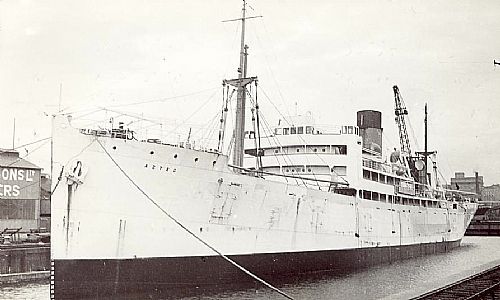
1814: Picture SS AZTEC."The following is used with permission from Dr. E. Lee Spence's daily blog Today's Shipwrecks™ (copyright 2013 by Dr. E. Lee Spence) on www.shipwrecks.com."
The United States Revenue Service schooner Gallatin, Captain John H. Silliman, was sunk a few yards off the end of Blake’s Wharf at Charleston, South Carolina, on April 1, 1813, by a violent explosion in her powder magazine. Her stern and quarterdeck were blown entirely away and she sank in just a few minutes. The cause of the explosion was not known and First Lieutenant Philips, who had left the vessel just prior to the explosion, reported that the magazine had been locked. There were 35 men aboard her at the time of the explosion. Gunner’s mate Thomas Feld; George Segur; and another man were reported missing and presumed dead. Gunner William Pritchard; John McCoan; Benjamin Chart; George Craft; and a boy named William Hunter were severely wounded, and several others were slightly wounded. As late as February, 1814, the vessel still had not been raised despite announcements that efforts to raise her were to have begun the day after the explosion. (Note One: She had been originally purchased at Norfolk, Virginia, in December, 1807, by Captain Hugh McNeill as a Treasury Department Revenue Cutter for the Charleston station for $9,432.93. She was named for Albert Gallatin who had been Secretary of the Treasury under Thomas Jefferson. During her career she was active in suppressing smuggling and frequently assisted merchant vessels, which were in distress. Acting under Navy orders during the War of 1812, the Gallatin intercepted a British privateer on August 6, 1812, and took her after a fierce battle that lasted 8 hours.) (Note Two: The “Charleston Courier” of February 26, 1814, reported that a diving bell had been constructed at Charleston, South Carolina, for the purpose of raising the guns, etc., from the wreck of the United States Revenue Service schooner Gallatin. All previous attempts to raise the wreck intact had failed.)
1816: A small sailboat plying between Sullivan’s Island, South Carolina, and Charleston, with a crew of two, was upset in a squall on April 1, 1816, near Castle Pinckney in Charleston Harbor, South Carolina, and one man was drowned.
1818: The vessel Keddington, Captain Bacon, from Jamaica to London, was lost on April 1, 1818, “on Atwood’s Key,” Bahamas. Her crew and part of the cargo were saved.
1835: The sidewheel steamer Augusta caught fire at her wharf at Augusta, Georgia, on April 1, 1835. Four lives were lost and the vessel and her machinery were destroyed. The passengers escaped with their luggage. [Note: The Augusta had a wood hull and was built in 1833 at Savannah, Georgia, which was also her first home port. She was 151 (or 157 tons). The Augusta was owned by the Steam Boat Company.]
1844: The British brig Helen, of Swansea, Captain Simpson, 49 days from Newport, Wales, went ashore on the Hunting Islands, South Carolina, on April 1, 1844. The Helen was also reported as “ashore on the breakers at South Edisto,” South Carolina. She carried a cargo of railroad iron, consigned to J. Gadsden & Nephew, of Charleston, South Carolina. The crew was saved.
1846: The schooner Commerce, Captain Burnham, bound from St. Johns, Florida, for Nassau with a cargo of lumber, was “wrecked at Harbor Island” (Harbour Island, Bahamas) on April 1, 1846.
1859: The steamboat Augusta was destroyed by fire on April 1, 1859, while she was tied up at Grey’s Point, below Silver Bluff on the Savannah River, forty miles below Augusta, Georgia. Mr. Henry Day (the first engineer who was a citizen of Savannah) and “three negro men” were drowned. The Augusta was burned to the water’s edge and, along with her cargo, was a total loss. (Note: She carried 778 bales of cotton and 538 barrels of flour, which was insured in New York, Boston, and Savannah. The boat originally cost $15,000 and was not insured. If based on the price of gold, her cost in today’s dollars, would have been well over $1,000,000.)
1860: The small steamboats Cherokee and Calhoun were burnt at Rome, Georgia, on April 1, 1860. (Note One: The Cherokee was owned by the Alabama Planters Steamboat Company and the loss was put at $14,000. $4,000 was covered by insurance. The Cherokee had cost $17,000 and had run about fourteen months.) (Note Two: The Calhoun was owned by the Oostanaula Steamboat Company. She was a new vessel, having run only three or four weeks on the Oostanaula River. She had cost $6,000 and was not insured.) (Note Three: These losses don’t sound like much until viewed in today’s dollars, which would have been over $3,000,000.)
1917: The first armed American merchant ship sunk by a German submarine in World War I was the SS Aztec. The Aztec, 3,727 tons, bound from New York for France, was shelled and torpedoed on April 1, 1917. She sank very near the Ile D’Ouessant (Isle d’Ushant). She carried foodstuffs; general supplies; tinplate; 448,195 pounds of refined copper ingots; 42 barrels of lead acetate weighing a total of 23,385 pounds; 1949 barrels of zinc oxide weighing a total of 265,325 pounds, and 52 boxes of metallic cadmium weighing a total of 7,500 pounds. Today the copper would be worth over $1,500,000; and the cadmium another $90,000. The zinc and lead would also have considerable value. But don’t get too excited, the copper was partially salvaged by an Italian firm in 1956.
1942: The British freighter Eastmoor, 5,812 tons, bound from Savannah to England via Halifax, was sunk by the German submarine U-71 off the Virginia coast in latitude 37°33′ North, longitude 68°18′ West. She carried 273 tons of zinc, 317 tons of steel ingots, 1,063 tons of pig iron, 1,052 tons of zinc bars, 91 tons of magnesium metal ingots, and 444 tons of cannon powder. At $0.90 per pound, the zinc is worth about $2,385,000. Depending on its purity, magnesium sells for about $2.45 making it worth about $445,900. Based solely on the time period, she may have also carried some silver.
Thanks to Dr E Lee Spence
Kathy Dowsett
www.kirkscubagear.com
Friday, March 29, 2013
Follow Your Head :: An Easy Tip for Maintaining Good Buoyancy and Swimming Position

Thanks to Natalie Gibb
When I was learning to drive a motorcycle, I had the tendency to jerk the bike's handlebars to the left or the right when maneuvering around a turn. I had trouble turning because I tried to separate the motion of the handlebars from the rest of my body. I didn't understand that a proper turn involves the driver's whole body. Not only should the driver turn the handlebars, he should lean into the turn and look where he is going. It sounds simplistic, but once I learned this rule the bike would effortlessly go wherever I looked. Now that I teach diving, I see many divers making the same mistake that I made learning to drive a motorcycle - they forget to follow their heads.
The basic idea is simple - if a diver looks up and kicks, he is going to go up. This makes sense because by looking up, a diver orients his body into a feet-down, head-up position. Even a slight fin motion will propel him towards the surface.
The most common situation in which a diver make this sort of error is when clearing his mask. During the open water course, a student diver is taught to look up while breathing out through his nose to empty his mask of water. When this skill is practiced in the pool, the diver is usually kneeling and unable to kick. However, when floating mid-water, it is not uncommon for a diver to unconsciously kick while clearing his mask, propelling himself upwards. An easy trick to avoid this mistake is to have the diver cross his legs at his ankles or knees before looking up, preventing inadvertent kicking.
Divers also tend to orient themselves vertically when observing turtles, sailfish, and other creatures that swim towards or along the surface. On many occasions, I have watched a diver discover a turtle near the ocean floor, kick along with it for a minute, and then tilt his head (and therefore his body) upwards to enjoy the view of the turtle surfacing. More often than not, this results in the diver slowly rising towards the surface with the turtle until I call his attention to the fact that he is beginning to ascend. Once a diver knows that looking up to watch a creature above him has the tendency to make him lose his position in the water, he can take actions to avoid the problem such as deflating his buoyancy compensator or crossing his ankles.
When ascending at the end of a dive, divers are trained to swim towards the surface in a head-up position. In this case, this is a positive habit because it helps a diver to move efficiently through the water and allows him to make small adjustments in his buoyancy using his fins. Once a diver reaches the safety stop depth, however, a vertical position can make maintaining a constant depth more difficult if the diver habitually makes small fin movements. Again, awareness of the fact that a diver in a head-up position will move upwards with almost any fin movement will help a diver in this situation to keep his level in the water. Carefully monitoring a reference (such as a depth gauge, dive computer, or ascent line) is usually the best way for a diver to train himself to maintain a constant depth during a safety stop, despite a vertical position.
Once a diver understands that his body will follow his head, he can use the fact to his advantage. Although most buoyancy adjustments should be made with a diver's buoyancy compensator and lungs, small adjustments can be easily made by swimming. If a diver finds himself moving slightly up every time he starts to kick, looking down while swimming will help him maintain his level in the water.
Look up, swim up. Look down, swim down. It is a simple concept, but one that is commonly over-looked by beginning divers!
Kathy Dowsett
www.kirkscubagear.com
Subscribe to:
Posts (Atom)