Pages

Showing posts with label Archeologists. Show all posts

Monday, April 1, 2013

Shipwrecks of April 1

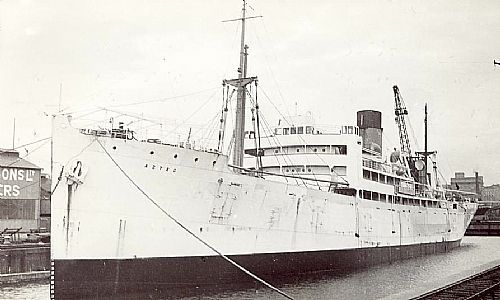
1814: Picture SS AZTEC.

"The following is used with permission from Dr. E. Lee Spence's daily blog Today's Shipwrecks™ (copyright 2013 by Dr. E. Lee Spence) on www.shipwrecks.com."

The United States Revenue Service schooner Gallatin, Captain John H. Silliman, was sunk a few yards off the end of Blake’s Wharf at Charleston, South Carolina, on April 1, 1813, by a violent explosion in her powder magazine. Her stern and quarterdeck were blown entirely away and she sank in just a few minutes. The cause of the explosion was not known and First Lieutenant Philips, who had left the vessel just prior to the explosion, reported that the magazine had been locked. There were 35 men aboard her at the time of the explosion. Gunner’s mate Thomas Feld; George Segur; and another man were reported missing and presumed dead. Gunner William Pritchard; John McCoan; Benjamin Chart; George Craft; and a boy named William Hunter were severely wounded, and several others were slightly wounded. As late as February, 1814, the vessel still had not been raised despite announcements that efforts to raise her were to have begun the day after the explosion. (Note One: She had been originally purchased at Norfolk, Virginia, in December, 1807, by Captain Hugh McNeill as a Treasury Department Revenue Cutter for the Charleston station for $9,432.93. She was named for Albert Gallatin who had been Secretary of the Treasury under Thomas Jefferson. During her career she was active in suppressing smuggling and frequently assisted merchant vessels, which were in distress. Acting under Navy orders during the War of 1812, the Gallatin intercepted a British privateer on August 6, 1812, and took her after a fierce battle that lasted 8 hours.) (Note Two: The “Charleston Courier” of February 26, 1814, reported that a diving bell had been constructed at Charleston, South Carolina, for the purpose of raising the guns, etc., from the wreck of the United States Revenue Service schooner Gallatin. All previous attempts to raise the wreck intact had failed.)

1816: A small sailboat plying between Sullivan’s Island, South Carolina, and Charleston, with a crew of two, was upset in a squall on April 1, 1816, near Castle Pinckney in Charleston Harbor, South Carolina, and one man was drowned.

1818: The vessel Keddington, Captain Bacon, from Jamaica to London, was lost on April 1, 1818, “on Atwood’s Key,” Bahamas. Her crew and part of the cargo were saved.

1835: The sidewheel steamer Augusta caught fire at her wharf at Augusta, Georgia, on April 1, 1835. Four lives were lost and the vessel and her machinery were destroyed. The passengers escaped with their luggage. [Note: The Augusta had a wood hull and was built in 1833 at Savannah, Georgia, which was also her first home port. She was 151 (or 157 tons). The Augusta was owned by the Steam Boat Company.]

1844: The British brig Helen, of Swansea, Captain Simpson, 49 days from Newport, Wales, went ashore on the Hunting Islands, South Carolina, on April 1, 1844. The Helen was also reported as “ashore on the breakers at South Edisto,” South Carolina. She carried a cargo of railroad iron, consigned to J. Gadsden & Nephew, of Charleston, South Carolina. The crew was saved.

1846: The schooner Commerce, Captain Burnham, bound from St. Johns, Florida, for Nassau with a cargo of lumber, was “wrecked at Harbor Island” (Harbour Island, Bahamas) on April 1, 1846.

1859: The steamboat Augusta was destroyed by fire on April 1, 1859, while she was tied up at Grey’s Point, below Silver Bluff on the Savannah River, forty miles below Augusta, Georgia. Mr. Henry Day (the first engineer who was a citizen of Savannah) and “three negro men” were drowned. The Augusta was burned to the water’s edge and, along with her cargo, was a total loss. (Note: She carried 778 bales of cotton and 538 barrels of flour, which was insured in New York, Boston, and Savannah. The boat originally cost $15,000 and was not insured. If based on the price of gold, her cost in today’s dollars, would have been well over $1,000,000.)

1860: The small steamboats Cherokee and Calhoun were burnt at Rome, Georgia, on April 1, 1860. (Note One: The Cherokee was owned by the Alabama Planters Steamboat Company and the loss was put at $14,000. $4,000 was covered by insurance. The Cherokee had cost $17,000 and had run about fourteen months.) (Note Two: The Calhoun was owned by the Oostanaula Steamboat Company. She was a new vessel, having run only three or four weeks on the Oostanaula River. She had cost $6,000 and was not insured.) (Note Three: These losses don’t sound like much until viewed in today’s dollars, which would have been over $3,000,000.)

1917: The first armed American merchant ship sunk by a German submarine in World War I was the SS Aztec. The Aztec, 3,727 tons, bound from New York for France, was shelled and torpedoed on April 1, 1917. She sank very near the Ile D’Ouessant (Isle d’Ushant). She carried foodstuffs; general supplies; tinplate; 448,195 pounds of refined copper ingots; 42 barrels of lead acetate weighing a total of 23,385 pounds; 1949 barrels of zinc oxide weighing a total of 265,325 pounds, and 52 boxes of metallic cadmium weighing a total of 7,500 pounds. Today the copper would be worth over $1,500,000; and the cadmium another $90,000. The zinc and lead would also have considerable value. But don’t get too excited, the copper was partially salvaged by an Italian firm in 1956.

1942: The British freighter Eastmoor, 5,812 tons, bound from Savannah to England via Halifax, was sunk by the German submarine U-71 off the Virginia coast in latitude 37°33′ North, longitude 68°18′ West. She carried 273 tons of zinc, 317 tons of steel ingots, 1,063 tons of pig iron, 1,052 tons of zinc bars, 91 tons of magnesium metal ingots, and 444 tons of cannon powder. At $0.90 per pound, the zinc is worth about $2,385,000. Depending on its purity, magnesium sells for about $2.45 making it worth about $445,900. Based solely on the time period, she may have also carried some silver.

Thanks to Dr E Lee Spence

Kathy Dowsett
www.kirkscubagear.com

Wednesday, February 20, 2013

Canada’s oldest shipwreck to be resurrected in replica of 16th-century Basque galleon

It’s the oldest shipwreck ever found in Canada and one of the most important in the world: a 16th-century Basque whaling galleon that lies at the bottom of Labrador’s Red Bay, a sunken relic from the Age of Discovery that symbolizes the early spread of European civilization — and commerce — to the New World.

Now, the 450-year-old San Juan, a jumble of thick beams and broken barrels lying in shallow waters off the site of a 1560s-era whaling station in the Strait of Belle Isle, is to be resurrected by a team of Spanish maritime heritage experts planning to construct a full-scale, seaworthy replica of the original 16-metre, three-masted vessel.

Parks Canada underwater archeologists, who discovered the 250-tonne San Juan in 1978 after following documented clues about a lost galleon traced by federal archivist Selma Barkham, will meet this week with Spanish officials to begin sharing decades of amassed research on the ship’s design and construction, Postmedia News has learned.

Then, to mark the Basque city of San Sebastian’s year as Europe’s “cultural capital” in 2016, Spain expects to christen its floating tribute to the whaling crews that — for several decades during the 16th century — transported millions of barrels of whale oil to Europe from the future Canada, a treasure every bit as valuable at the time as the gold taken by Spanish conquistadors from more southerly parts of the Americas.

“Right from the start, we thought this was a really, really great idea,” said Marc-André Bernier, Parks Canada’s chief of underwater archeology. “For archeologists, this is basically the ultimate final product. You’re taking all of the research from a site that’s been excavated, then you take it to the maximum in experimental archeology,” physically recreating “what is lost.”

For Robert Grenier, Bernier’s predecessor as Canada’s top marine archeologist and the leader of the Red Bay discoveries more than three decades ago, the planned construction of a San Juan replica is “like a dream.”

The 75-year-old Grenier, whose work at Red Bay was featured in a National Geographic cover story in 1985, is now retired but has agreed to serve as a consultant to Spanish shipbuilders on the San Juan project.

He previously collaborated with Basque heritage experts on the recreation of a chalupa — a smaller boat used by whaling crews to pursue and harpoon bowhead and right whales — that was also found at the Red Bay site.

“To the Basques, this is the Holy Grail,” he said of the planned San Juan replica on Monday, while visiting a display on Basque whaling operations at the Canadian Museum of Civilization in Gatineau, Que.

The Canada Hall exhibit features a 20-to-one scale model of a Basque whaling galleon, as well as a full-scale reproduction of the stern of the ship.

“They are so thankful to us — Canada and Parks Canada — to have restored to them the glory of their golden age,” said Grenier.

The replica galleon to be built in the coming years is expected to travel between European cities during 2016 to mark the San Sebastian celebrations, then set sail for Labrador and other East Coast destinations in 2017 — in time for the 150th anniversary of Confederation — to help spread awareness of the deep historical connection between Canada and Spain.

“It’s their heritage,” Bernier said of the Basques, who live in the coastal region straddling the border of northeast Spain and southwest France. “But it’s also a shared heritage.”

Significantly, Bernier noted, the Red Bay wreck dates from an era before European shipbuilding had developed to the point of creating blueprints prior to construction.

“There were no ships’ plans — they were built with traditional knowledge,” he said. “Everything was in the shipbuilders’ minds. That’s why the data from the archeology is so critical.”

In the decades following the New World discoveries of Christopher Columbus and John Cabot, the expert shipbuilders, sailors, fishermen and whalers from the Basque country began making transatlantic voyages to exploit coastal Canada’s cod and whale populations.

Lamp oil from whales killed in the Strait of Belle Isle became the key commodity for Basque entrepreneurs, who developed shoreline “factories” to render hundreds of thousands of barrels of oil and organized regular shipping schedules between Canada and Europe to deliver the product.

The sinking of the San Juan, which was loaded with thousands of barrels of rendered whale blubber when it foundered close to the Red Bay shore in 1565, was essentially Canada’s first oil-tanker disaster. Much of the cargo was, however, recovered before the vessel was crushed by winter ice.

Although the presence of Basque whalers in 16th-century Canada was long known to historians, it wasn’t until Barkham presented fresh evidence at an Ottawa archeological conference in 1977 that plans were made to search for physical traces of the whalers’ activities in present-day Labrador.

Along with the wreck of the San Juan, Parks Canada archeologists eventually found traces of three other galleon-class cargo ships, as well as the well-preserved chalupa rowboat.

Land-based excavations led by Newfoundland archeologist James Tuck also yielded burial sites, clothing, tools and countless other relics that recalled a time when hundreds of Basque workers might spend a whaling season in 16th-century Canada.

Today, Red Bay is a national historic site and Parks Canada tourist centre. An image of the San Juan is used by the United Nations as its logo to promote the preservation and celebration of the world’s underwater heritage, and a five-volume, 2008 compendium of Red Bay archeology written by Grenier and Bernier has been hailed internationally as a model for scholarly research on shipwrecks.

Red Bay is a leading contender to become Canada’s next UNESCO World Heritage Site.

Thanks to Canada.com

Kathy Dowsett
www.kirkscubagear.com

Thursday, September 1, 2011

Divers find Northwest Passage discovery artifacts

Critical position of HMS Investigator on the n...Image via Wikipedia

A musket and other artifacts from HMS Investigator, the ship abandoned in the Canadian Arctic in 1854 during the hunt for Sir John Franklin’s lost expedition, have been recovered by divers. The ship is credited with discovering the Northwest Passage.

Shoes, a musket, a copper sheet, and parts of the ship’s rigging were among the items brought up over nine days this July from the wreck discovered last summer in Mercy Bay, off Banks Island in the Northwest Territories. Divers were lucky enough to find the usually ice-covered bay largely open water during the expedition.

Marc-André Bernier, the Parks Canada scientist who led the expedition, said that “to dive on that shipwreck that is literally frozen in time... with artifacts on the deck” was the highlight of his career of more than 20 years.

Archeologists photographed and mapped the ship using sonar and video to determine its state of preservation.

"Although the hull is basically survived up to the main deck, the main deck is a litter of timbers,” Bernier said at a news conference.

The ship continues to be damaged by ice, he said, but there was a lot of sediment within the interior of the ship.

“This is basically the best conditions to preserve artifacts,” he added.

The buried artifacts were left untouched, but about 16 lying outside and on the deck were recovered because they were exposed, and researchers feared they could become damaged before an expedition could return to the site.

Bernier said the most exciting was the copper sheeting, which protected the ship's hull from marine organisms. That's because the copper can be chemically tested and compared to copper found at other sites to figure out whether those pieces originally came from HMS Investigator, or compared to the copper on other ships.

He added that some of the items, such as the shoes, are of interest because they appear to include waterproofing or other modifications for use in the Arctic.

Researchers also conducted land surveys as part of the expedition, collecting an inscribed wooden barrel top, an arrow and a tin can near a cache linked to Robert McClure, the captain of HMS Investigator.

They identified four new archeological sites, including a small aboriginal camp and rock cairn.

At one point, the researchers responded to a search and rescue call that brought them near a previously known archeological site believed to have been used as an observatory by Franklin's crew between 1846 to 1848. There, they checked up on the site and collected artifacts that included bottle glass, copper nails, twine or rope, tent canvas, and pieces of tobacco smoking pipes.

However, as previously announced, they did not manage to locate HMS Erebus and HMS Terror, Franklin's long-lost ships, in the third year of a three-year hunt for them.

Environment Minister Peter Kent gave his assurances that government-funded expeditions will continue to visit the Arctic each summer to continue the search and map the Arctic waters that are becoming increasingly ice-free and navigable.

"Certainly, I can assure you that this will be an ongoing project," he said.

Kent noted that while HMS Investigator was trapped in a bay, where it stayed put, HMS Erebus and HMS Terror may have drifted very long distances to two very different sites, based on Inuit oral history indicating their locations.

Bernier said the area that needs to be searched is enormous, but that large swaths are ruled out each year.

"“We are getting closer because we have covered more territory,” he said.

HMS Erebus and HMS Terror are considered by Parks Canada to be National Historic Sites, Bernier added.

"They are the only National Historic Sites for which we don’t know the location," he said, adding that the department has the mandate and the responsibility to find them.

Thanks to MSN News

Kathy Dowsett

www.kirkscubagear.com
Enhanced by Zemanta